
The tragic death of a fitness icon reminds us that physical fitness is only one part of healthy longevity. The mind, relationships, purpose, and spiritual health matter too.
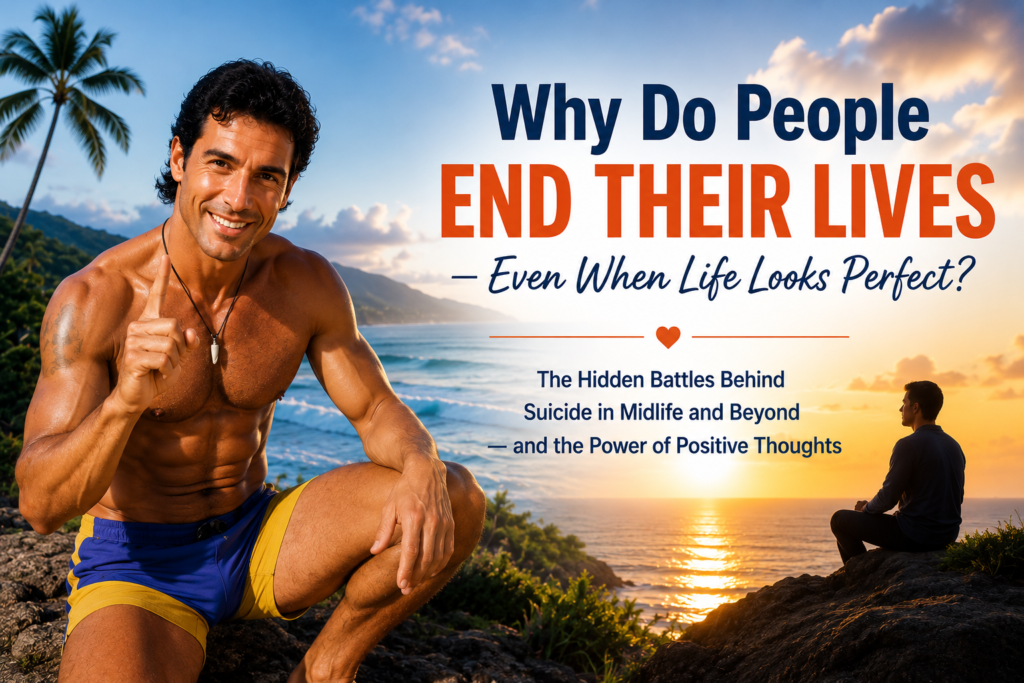
I was shocked when I discovered the tragic circumstances surrounding the death of Gilad Janklowicz.
If you grew up in the 1980s or 1990s, you probably remember him from Bodies in Motion. Filmed against the beautiful beaches of Hawaii, the show made Gilad one of the most recognizable faces of the fitness era. He remained active into his 70s and was reportedly planning new projects shortly before his death.
He seemed to have everything.
He was handsome, incredibly fit, successful, and living in Hawaii. On television, he was surrounded by beautiful women exercising on tropical beaches. Men admired him. Women adored him.
I expected someone like Gilad to live beyond 90.
Instead, he died at 71.
In August 2026, his family revealed that the medical examiner had officially determined his death to be suicide. His family also acknowledged that they were struggling to understand what circumstances led to the tragedy.
And perhaps that is the most disturbing part.
We Never Really Know What Is Happening Inside Another Person
Looking at Gilad from the outside, most of us would have seen health, strength, discipline, success, and vitality.
But what we see on the outside does not necessarily reflect what is happening inside the body or mind.
Why would a successful, physically fit 71-year-old man end his life?
In Gilad’s case, we don’t know, and we should respect his family’s privacy rather than invent an explanation.
But his death raises a much larger question.
Why does anyone reach a point where continuing to live seems more painful than dying?
Science tells us that suicide is rarely caused by one event or one condition. The CDC identifies depression and other mental illnesses, chronic pain and serious illness, substance use, financial or employment problems, hopelessness, relationship loss, social isolation, and traumatic experiences among the factors associated with increased suicide risk.
For older adults, the challenges can multiply.
Physical decline, chronic illness, loss of independence, retirement, bereavement, loneliness, cognitive changes, and watching friends and loved ones disappear can profoundly alter how someone experiences life. Older men, in particular, have some of the highest suicide rates.
But we shouldn’t make the mistake of believing suicide is simply an issue of old age.
What About People in the Prime of Life?
Middle-aged adults can face an entirely different set of pressures.
Careers can collapse. Marriages can end. Financial problems can become overwhelming. Children leave home. Parents die. Dreams that once seemed possible can begin to feel unreachable.
Add depression, anxiety, alcohol or drug use, trauma, chronic stress, relationship problems, or serious illness, and a person who appears perfectly functional from the outside may be fighting a battle nobody sees.
In 2023 alone, more than 49,000 Americans died by suicide, and suicide was among the eight leading causes of death for Americans ages 10 through 64.
Yet there is something else we need to understand.
Having depression, experiencing financial problems, losing a relationship, or suffering from illness does not mean someone will become suicidal. Most people experiencing these problems do not die by suicide.
There are risk factors, but there are also protective factors.
And some of those protective factors tell us something important about healthy longevity.
A Healthy Body Is Not Enough
We talk constantly about exercise, cholesterol, blood pressure, nutrition, weight, supplements, and medical screenings.
All of these can matter.
But human health is bigger than the physical body.
What happens when someone has a strong body but loses hope?
What happens when the muscles are strong but the relationships are broken?
What happens when someone has money and success but no longer feels that life has meaning?
Research recognizes several factors that can help protect against suicide, including effective coping skills, having reasons for living, support from family and friends, connection with others, and a strong sense of cultural identity. The CDC also recognizes cultural, religious, or moral beliefs as potential protective factors.
That brings me to something I consider fundamental to healthy longevity.
The Seventh Fundamental: Positive Thoughts
Chapter 7 of my book, The 7 Fundamentals for Healthy Longevity, is dedicated to what I call Positive Thoughts.
But positive thinking, as I define it, is not standing in front of a mirror repeating, “Everything is wonderful.”
Life isn’t always wonderful.
We experience failure, illness, rejection, aging, grief, disappointment, and eventually death.
Positive Thoughts is about something deeper.
It is about the relationship between you, yourself, and God.
First comes your relationship with yourself. Can you accept yourself? Can you forgive yourself? Can you live with your past without allowing it to destroy your future?
Then comes your relationship with other people. Do you have meaningful relationships? Do you feel needed? Do you give and receive love?
And finally comes the spiritual question. Do you believe your life has meaning beyond possessions, appearance, career, status, and physical strength?
For me, aligning these relationships creates something enormously important:
a reason to keep living.
Faith is not a substitute for professional mental health care, and spirituality does not make someone immune to depression or suicide.
But neither should we pretend that meaning, purpose, hope, human connection, and spiritual life are irrelevant to health.
They may be among its most important foundations.
Gilad Janklowicz spent decades teaching millions of people to keep their bodies in motion.
Perhaps his tragic death can remind us of another lesson.
A healthy body matters, but healthy longevity requires us to care for the person living inside that body too.