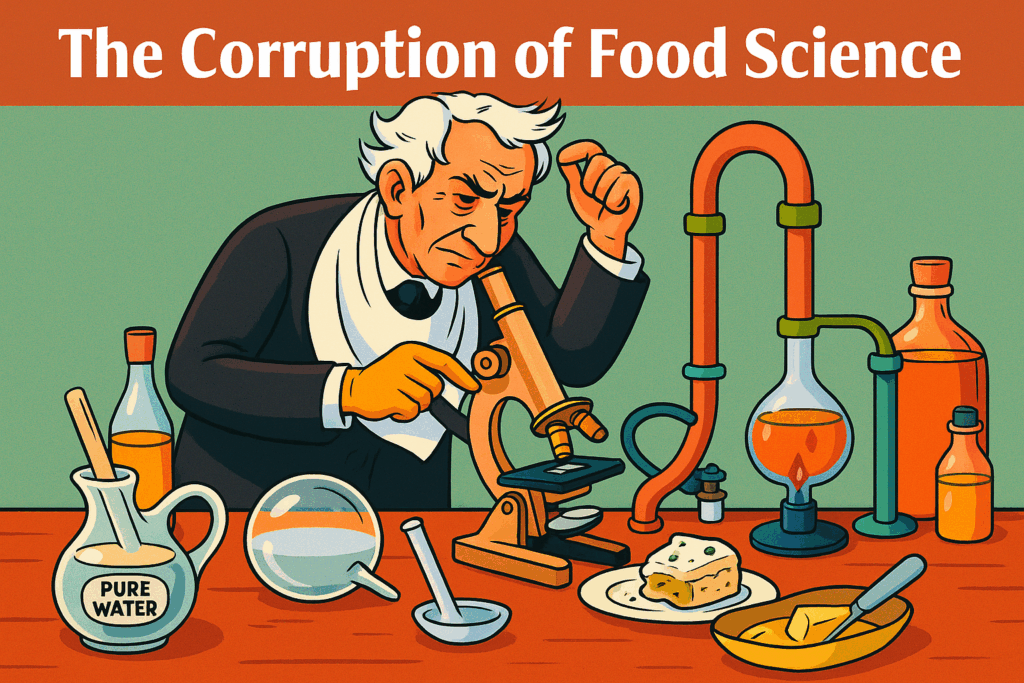


When people hear the word “science,” they often think of truth. They imagine dedicated researchers in labs, working tirelessly to uncover facts that improve our health and future. But science isn’t always about truth. In many cases, especially in the world of food and nutrition, it has become a tool for power. The question isn’t always “what does the evidence show?” but rather, “who paid for it?”
In today’s food industry, whoever funds the research often controls the story. In theory, science is impartial. But financial sponsorship influences study design, interpretation, and reporting. In nutrition science, that means food manufacturers, agricultural giants, and industry-backed trade associations pay for the studies that shape public perception and policy.
As a result, many of the “truths” we hear about nutrition aren’t truths at all – they’re narratives constructed to protect profits. Consumers are urged to “trust the science,” but much of that science is bought, not earned.
The Meat Industry: Disguising Harm with Marketing
Take the meat industry, for example. You’ve likely heard the slogan: “Beef. It’s what’s for dinner.” This catchy phrase wasn’t just smart marketing; it was the product of a well-funded lobbying group, the National Cattlemen’s Beef Association (NCBA). The NCBA has poured millions into both advertising and studies designed to downplay the well-established links between red and processed meat and chronic diseases like cancer, heart disease, and diabetes.
Whenever independent research points to these dangers, industry groups respond with counter-studies to cast doubt, create confusion, and delay regulatory action. Their goal isn’t to disprove the risks – it’s to keep the conversation going long enough to preserve sales.
The Egg Industry: Scrambling the Truth
The American Egg Board (AEB), a federally sanctioned marketing arm, has employed similar tactics. When studies began linking dietary cholesterol (like that found in eggs) to heart disease, egg consumption dropped. The Egg Board didn’t dispute the science. Instead, it launched a full-fledged public relations campaign, funding studies that reinterpreted the data and suggested that dietary cholesterol might not be so bad after all.
Internal documents, exposed through lawsuits, revealed the board knew the risks but chose to manipulate the message. The result? Confusion. Today, many people believe an “egg a day” is perfectly healthy, despite the lingering evidence that excessive cholesterol intake poses risks for many individuals.
Dairy: The Calcium Myth
Few industries have embedded themselves more deeply into public policy than dairy. Backed by the National Dairy Council (NDC) and Dairy Management Inc., the dairy lobby has spent decades promoting the myth that milk is essential for strong bones.
From the “Got Milk?” campaign to subsidized school milk programs, dairy has been pushed into our daily lives. Yet, large-scale studies have shown that populations with the highest dairy consumption often have higher rates of fractures, not lower. Moreover, many people suffer from lactose intolerance, allergies, or experience digestive discomfort after consuming dairy.
Despite this, dairy remains a staple in U.S. dietary guidelines, not because of its proven benefits, but because of its proven lobby.
When Guidelines Serve Profits, Not People
Trade associations do more than create ads. They shape the very guidelines that influence what appears on school menus, hospital trays, and dietary recommendations. Through aggressive lobbying, sponsorship of nutrition conferences, and even paying respected researchers to endorse their views, these groups blur the lines between science and marketing.
This manipulation filters down into everyday advice: butter is bad, then good; eggs are harmful, then harmless; meat is a threat, then a superfood. Consumers are caught in a loop of contradictory claims, left unsure of what to eat. The chaos isn’t an accident. It’s the result of corporate strategy.
This confusion does real damage. It delays meaningful public health action. It undermines trust in genuine science. And worst of all, it keeps people trapped in patterns of eating that lead to obesity, heart disease, diabetes, and cancer.
When food science becomes a tool for corporations, public health suffers. The rise in preventable diseases, the epidemic of misinformation, and the growing distrust in experts all stem from this fundamental corruption.
Reclaiming the Truth: Real Food, Real Science
To navigate this maze of misinformation, we must become more discerning. Start by asking:
- Who funded the study?
- Are the results consistent with independent research?
- Does the claim align with biological and ancestral wisdom?
In many cases, traditional diets rich in whole, plant-based foods remain our best guide. Cultures that consume high amounts of fruits, vegetables, legumes, and whole grains with minimal processed food and animal products consistently show lower rates of chronic illness and longer lifespans.
Unlike ultra-processed products, whole plant foods nourish the body on a cellular level. They provide water, fiber, antioxidants, phytonutrients, and enzymes that support digestion, detoxification, and regeneration.
Foods like leafy greens, berries, nuts, seeds, cruciferous vegetables, and legumes help reduce inflammation, regulate blood sugar, and promote gut health. They work in harmony with the body, not against it.
The Digestive System and Disease
Modern food isn’t just unhealthy, it’s disruptive. Additives, emulsifiers, preservatives, and artificial sweeteners damage the gut microbiome. This imbalance contributes to everything from brain fog and fatigue to autoimmunity and mental health disorders.
The body was not designed to digest synthetic substances. From artificial flavors and preservatives to emulsifiers and colorings, these man-made compounds interfere with our biology on a cellular level. They disrupt the gut microbiome, confuse hormonal signals, overload the liver, and contribute to chronic inflammation. Over time, they erode the body’s natural ability to heal and regulate itself. What we call “food” in modern supermarkets is often chemically processed, edible, perhaps, but not nourishing.
Real food is something entirely different. Real food is information. It speaks the language of your cells. It tells your DNA how to repair, your brain how to focus, your hormones how to stay in sync, and your metabolism how to stay balanced. A crisp apple, a handful of raw almonds, a bowl of steamed greens, these aren’t just calories. They’re biological messages. Every bite delivers instructions that can either restore or disrupt the body’s internal harmony.
Once we reject the noise of corporate-controlled science, the headlines bought by food lobbies and processed food giants, we can return to a grounded, intuitive understanding of nutrition. Food is not merely fuel. It is chemistry in action. And that chemistry has consequences. It can build resilience, sharpen cognition, and strengthen immunity. Or it can trigger inflammation, confusion, and disease.
In every bite, we are casting a vote for vitality or for dysfunction. We are either feeding disease or fighting it. The answer to modern health crises isn’t buried in fad diets, celebrity endorsements, or miracle products. It’s found in the soil. In food that is whole, clean, and alive. Food that has not been tampered with, marketed to death, or stripped of its essence. Real food, grown in real soil, with real integrity, this is what the body understands. And this is where healing begins.
A Call to Awareness
The corruption of food science isn’t a conspiracy theory – it’s a business strategy. But we don’t have to participate. By educating ourselves and questioning the narratives pushed by billion-dollar industries, we reclaim our right to health.
Nutrition isn’t complicated. It’s been made confusing on purpose. But when we strip away the noise, the message is clear: eat whole foods, hydrate, move your body, and stay informed about the seven fundamentals for healthy longevity.