
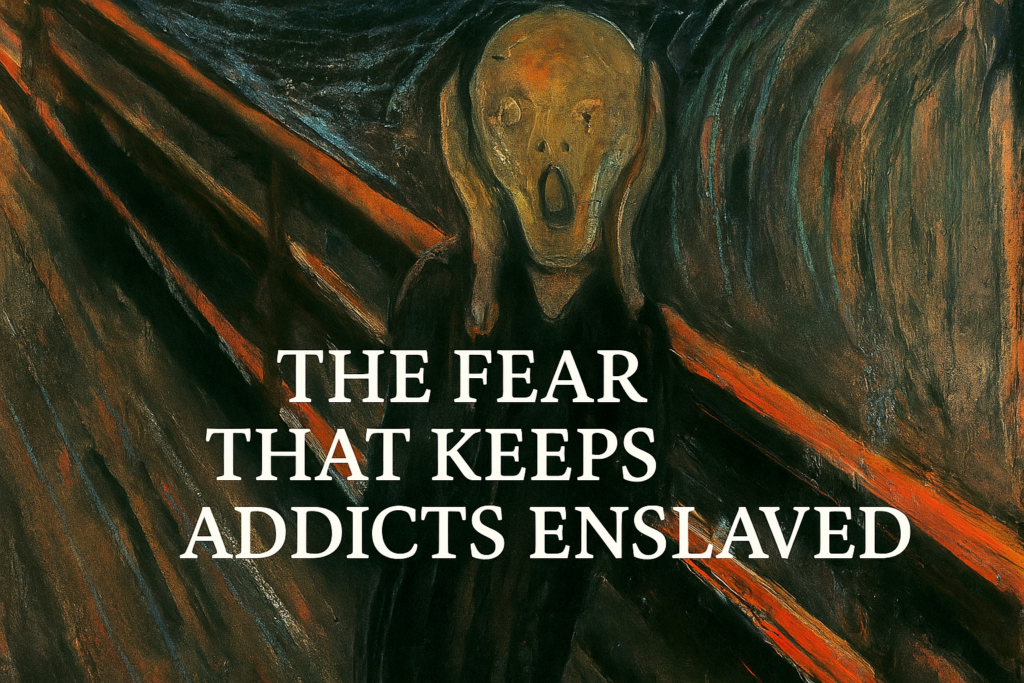


If you’ve ever been trapped in addiction, you know fear well. Not the distant fear of illness or death but the immediate panic of being without your substance of choice. Whether it’s cigarettes, sugar, alcohol, or another behavior, the fear of losing that crutch is paralyzing.
How many times have you checked your cigarette pack, fridge, or pantry just to feel secure? That obsessive need to know your “fix” is available isn’t a weakness. It’s fear whispering in your ear, controlling you from the shadows.
To recover, we must face fear head-on because no one walks out of addiction without walking through fear first. It’s the invisible barrier between where you are now and where freedom lives. Your first step isn’t quitting, it’s building the courage to imagine life without the addiction.
The Addict’s Paradox
Most addicts aren’t afraid to die. They’re afraid to quit.
It sounds dramatic, but it’s true. Addiction becomes a comfort, a survival tool, a familiar pattern. Even when you know it’s killing you, you hold on. Why? Because what you fear more than the damage is what might happen without it: emptiness, boredom, emotional pain.
The substance that’s hurting you is the same one you believe you can’t live without.
That fear doesn’t come from logic. It lives in your subconscious. To overcome it, you must separate real fear from imagined fear and realize that most of what holds you back is fiction, not fact.
Real vs. Imaginary Fear
Real Fear: Your Survival System at Work
Real fear is biological. It’s your body’s way of keeping you alive. It’s what you feel when you’re in physical danger during a car crash, a fire, or an earthquake. Your brain kicks into fight, flight, or freeze mode, pumping adrenaline to help you survive.
This instinct is thousands of years old and incredibly effective. But it only activates in real-time threats. Addiction doesn’t usually trigger this kind of fear. Instead, it feeds off imaginary fear.
Imaginary Fear: The Mind’s Illusion
Imaginary fear isn’t based on reality. It’s built on memories of the past and worries about the future. Your brain pulls from emotional pain, failures, shame, and what-ifs, turning them into mental movies that feel real but aren’t.
A smoker remembers a failed attempt to quit and fears another crash. A food addict fears hunger because of a past trauma. None of this is happening now. But the brain reacts as if it is.
Imaginary fear says, “You’ll never cope.” “You’ll be miserable.” “You’ll fail again.”
But these are just stories. Not facts.
Recognizing that your fear isn’t real in the present is the first crack in the wall that addiction hides behind.
The Three Fears That Keep You Addicted
Addiction wraps itself in fear so tightly that it feels like part of who you are. But if you look closely, three specific fears enslave most addicts:
1. Fear of Change
Addiction becomes your identity. Even if it’s destroying you, it feels familiar. Quitting means becoming someone new, and that’s terrifying.
The mind clings to comfort, whispering:
- “Maybe I can just cut back.”
- “It’s not the right time.”
- “What if I fail again?”
But nothing changes until you do. The comfort zone is not your safe space; it’s your trap. Growth demands discomfort. Recovery requires stepping into the unknown.
2. Fear of Failure and Rejection
If you’ve tried to quit before, you may carry the pain of relapse. That emotional scar creates a fear of trying again.
You might also fear judgment of what others will say, or worse, what you’ll say to yourself if you fail again.
But relapse isn’t proof of failure, it’s proof that you’re trying. Each attempt teaches you something new. People who truly care will support your freedom. Those who mock your progress may still be enslaved themselves.
3. Fear of Social Loss
Addiction is often social. You drink with friends. You bond over cigarettes. You share food rituals.
So quitting threatens more than the habit; it threatens your community. The fear is real:
“What will they say?”
“Will I lose these people?”
“Will I be alone?”
Yes, addiction loves company. But true connection isn’t built on shared destruction. It’s built on shared growth. And when you break free, you may lose some people, but you’ll find yourself.
These fears feel real. But they are illusions, mental walls that crumble the moment you question them.
Choosing Courage Over Control
Here’s the truth: fear isn’t your enemy. Surrendering to fear is.
Courage isn’t the absence of fear. Its movement in the presence of it.
Every person who quit smoking, lost weight, or walked away from addiction felt fear. But they moved anyway. That’s what separates the stuck from the free.
Courage is:
- Trusting that life without addiction will be better, even if you’re not 100% sure.
- Taking action even when you’re afraid.
- Trying again after you relapse.
- Saying “I’m ready” even when fear tells you to wait.
Fear doesn’t leave first. You move first, then fear fades.
Every time you act in spite of fear, you build confidence. You strengthen your inner muscle. You break the spell.
You don’t need to be fearless. You just need to move.
The Deepest Fear: Never Being Happy Again
This is the final, hidden fear: the belief that without your addiction, you’ll never feel joy again.
But here’s the truth: substances don’t create happiness. They simulate it. Real joy is found in connection, clarity, peace, energy, and purpose. And those things can only grow in the soil of freedom.
Your addiction doesn’t give you joy. It gives you temporary relief from pain.
Your fear of losing it is the map pointing you toward healing. But it doesn’t have to be this way. If you are struggling with addiction, tried to quit a few times, relapsed, and are afraid to try again, I want you to know that you’re not alone. Most people addicted to nicotine, fattening foods, alcohol, and drugs share the same fear.
Now, you have two choices:
- Do nothing and hope the worst of all won’t find its way to you.
- Click this link and find out how you, too, can find the freedom from your addiction.
The choice is yours