

When most people think of protein, they picture a steak, a chicken breast, or perhaps a protein shake. We often hear that protein builds muscles, gives strength, and is the most important nutrient for health. While protein is indeed essential, there is a great deal of misunderstanding about what it really is, how the body uses it, and where the best sources come from.
Are You Being Misled About Protein? The Truth Behind the Hype
I am honestly amazed at how often dietitians and influencers on social media keep pushing animal protein as the gold standard. They’re recycling information that’s over a century old, as if nothing has changed in nutrition science. The reality is, their view of protein is incredibly narrow. They rarely acknowledge the full picture of how the human digestive system works, the essential role fiber plays in health, or what our microbiome needs to thrive.
Now, whether they spread this outdated message out of ignorance or because they’re influenced by industries that profit from it, I’ll leave for you to decide. But either way, the result is the same: consumers, people like you, are left misinformed.
And since protein is always the hot topic, let’s talk about the so-called “king of protein” – meat. Before I share the untold story of protein, first, it’s important to take a closer look at meat itself.
Meat as Status and Survival
For most of human history, meat was more than food – it was a symbol of status. Only elites and landowners could afford frequent access to livestock, while peasants and laborers subsisted mainly on grains, legumes, and vegetables. Even slaves, who performed the hardest physical labor, lived on plant diets, yet were strong enough to sustain their demanding work. By the eighteenth century, meat had become shorthand for wealth, prestige, and even greed, its presence on the table as much a display of power as fine silverware.
From an evolutionary perspective, however, meat did serve an important role. Early humans who included animal foods gained dense calories, protein, and bioavailable nutrients like iron and zinc that complemented otherwise fibrous, lower-quality plant diets. These advantages likely helped during seasonal shortages and may have contributed to the survival edge of Homo sapiens. In that ancient context, meat was not a luxury but a matter of survival.
The “Meat Made Us Human” Hypothesis
For decades, anthropologists claimed that eating meat was the primary driver of the dramatic increase in human brain size. The argument centered on three main points:
- Brain-trophic nutrients – Meat is rich in B vitamins, iron, zinc, and choline, all important for building neural tissue.
- Energy and fuel – Animal foods provide concentrated calories compared to raw, fibrous plants, potentially fueling the high energy demands of a large brain.
- Biochemical support – Compounds such as nicotinamide (vitamin B3) may have played roles in fertility, immunity, and metabolism.
Yet, this theory faces growing challenges. A 2022 study published in PNAS reviewed archaeological records and found no clear evidence that meat consumption increased dramatically over evolutionary time. What looked like a “rise” may simply reflect more intensive excavation at meat-related sites. Alternative explanations, such as the control of fire and cooking, likely had a much greater impact on nutrient absorption and digestion. Cooking made both plant and animal products more digestible, reducing pathogens and increasing energy availability without requiring a sharp rise in meat intake.
Meat and Cognitive Health Today
Even if its evolutionary role is debated, meat undeniably contains nutrients essential for brain health:
- Iron and zinc support neurotransmitter production, oxygen transport, and memory (cooking can reduce their availability and concentration in food)
- B vitamins (B3, B6, folate, riboflavin) are critical for nervous system function (B vitamins, including B6 and folate, are sensitive to heat and can be destroyed or leached out during cooking).
- Choline contributes to neurotransmitter synthesis and memory retention.
But, and this is crucial:
These same nutrients exist in plants. Iron and zinc are abundant in legumes, nuts, and seeds. Folate, riboflavin, and B6 are widely available in leafy greens, grains, and vegetables. After we clear it out, let’s proceed to understand more about protein.
Not All Proteins Are the Same
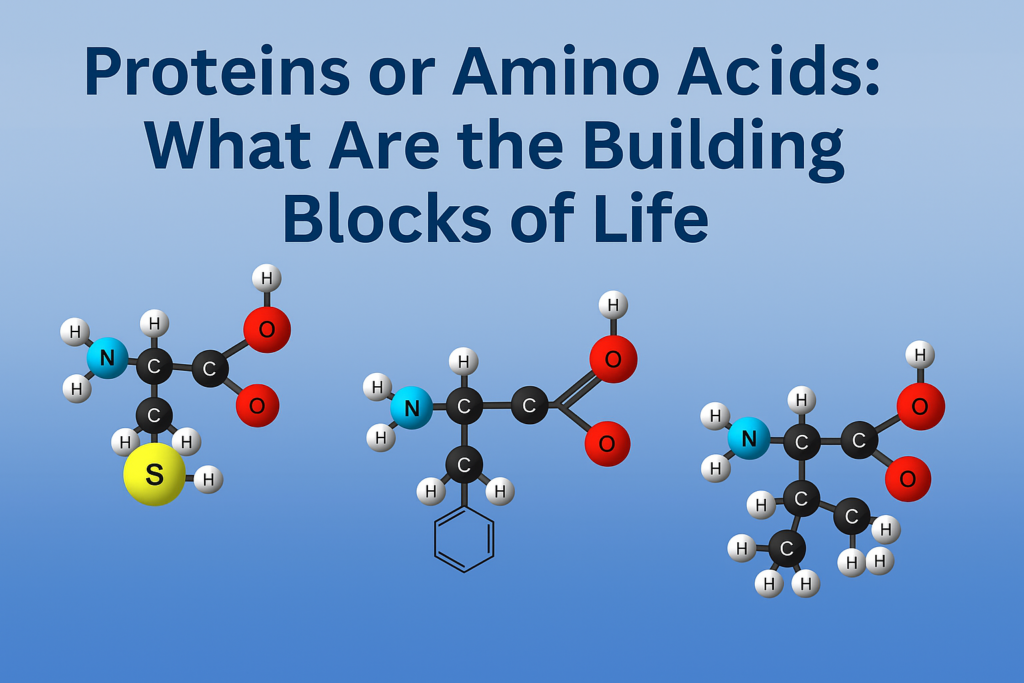
Proteins are not a single substance. They are large, complex molecules made of chains of smaller units called amino acids. Different proteins serve different purposes in the body. For example, the proteins that make up muscle tissue are not the same as the proteins that form bones. The proteins that create hair, nails, and skin are completely different from those that make up your heart, liver, kidneys, or pancreas. Each organ and tissue is built from a unique protein combination that gives it its structure and function.
This is why the body cannot simply take in “protein” and use it directly. Instead, when we eat protein, our digestive system breaks it down into amino acids. These amino acids are then reassembled into the specific proteins the body needs at that exact time. Whether for repairing a torn muscle fiber, replacing skin cells, building strong bones, producing enzymes, or creating hormones.
The Chase for Protein or Amino Acids
This brings us to a very important point: the body does not actually need “protein” in its whole form. What it needs are amino acids. There are twenty amino acids in total, and nine of them are considered essential amino acids, meaning the body cannot make them on its own, and they must come from food.
The essential amino acids are: histidine, isoleucine, leucine, lysine, methionine, phenylalanine, threonine, tryptophan, and valine. Each one has specific roles. For example, Lysine helps with collagen formation and calcium absorption. Tryptophan is a building block for serotonin and melatonin, which influence mood and sleep. Leucine plays a central role in muscle repair and energy regulation. Without a steady supply of all nine essential amino acids, the body cannot maintain health.
The other eleven amino acids are “non-essential” only because the body can make them when needed, but even these require raw materials and energy to be produced.
The Myth of “Whole Protein”
For decades, people have been told they need “whole protein” from animal sources to stay healthy and strong. This is misleading. There is no such thing as a whole protein in the sense that the body absorbs it directly. Whether you eat a steak or a bowl of lentils, the protein is broken down into amino acids during digestion and then rebuilt into new proteins inside your cells.
What matters is that you get all nine essential amino acids from your diet. You do not need to get them all in one single food or even in one meal. Over the course of a day, the body keeps a circulating pool of amino acids, pulling what it needs from the variety of foods you eat.
This means that if you eat a variety of wholesome, natural foods, your body will assemble the amino acids into exactly the proteins it requires. You do not need to obsess over “complete” or “incomplete” proteins. That is a marketing concept, not a biological necessity.
Plant Foods That Provide All Amino Acids
Contrary to popular belief, plants can provide all the essential amino acids. Some plant foods, such as quinoa, buckwheat, soybeans, amaranth, hemp seeds, chia seeds, and spirulina, naturally contain all nine essential amino acids. These are sometimes called “complete proteins.”
Even if you do not eat these foods, you can easily get all essential amino acids by eating different plant foods over the course of a day. In truth, if you eat a varied diet of fruits, vegetables, legumes, whole grains, nuts, and seeds, your body will have more than enough raw materials to build every protein it needs.
Amino Acids and Health
Researchers believe that imbalances in amino acids can contribute to fatigue, poor digestion, and even premature aging. Eating enzyme-rich, fresh foods such as fruits, vegetables, nuts, seeds, and sprouts not only provides amino acids but also the enzymes that help your body process and absorb them.
Fresh, living foods come with their own built-in toolkit to help the body thrive. In contrast, cooked and processed foods stripped of enzymes and nutrients place more strain on the digestive system and reduce the availability of amino acids for vital functions.
Understanding the role of amino acids in health and longevity is just one piece of the puzzle. If you care about your health and want to learn practical steps to achieve lasting wellness, click here to watch my full presentation.