




You probably already know that proper nutrition is fundamental to staying healthy. However, despite all the research on nutritious food and beneficial supplements, the majority of people over 60 already have at least one chronic disease. Unfortunately, despite all the researchers and the accumulated knowledge, chronic diseases remain commonplace.
At the same time, people of all ages, from the young to the elderly, suffer to varying degrees from digestive system issues. Could many chronic diseases be linked to something happening in the gut that the food and pharmaceutical industries prefer not to address?
The connection between gut microbes and healthy longevity.
You’ve probably heard about the bacteria in the digestive system. These microbes are there to break down what we eat, and in return, the nutrients they release are absorbed through the digestive tract to nourish the body. In the gut, there are several hundred strains of bacteria, and their total number exceeds the number of cells that make up the human body.
The total weight of all these microbes in your gut can reach 2 kilograms, which is about 5 pounds. Can you imagine that throughout the digestive system, countless microscopic organisms work to break down the food you eat into essential nutrients that can be absorbed and nourish the body? Essentially, our health and lives depend on these microscopic creatures. Without them, we simply couldn’t survive.
You can eat the healthiest foods on the planet. Still, without bacteria to break it down, your body won’t be able to absorb minerals, vitamins, amino acids, fats, and other essential nutrients. Many people experience gut bacteria imbalance, and when it becomes chronic, most likely two things happen:
1. The number of disease-causing bacteria increases, leading to acute and seasonal illnesses.
2. The likelihood of developing chronic diseases also rises.
The conclusion is very simple. To maintain good health and longevity, we need to support the well-being of the gut microbiome. Surprisingly, there are only three main factors that influence the bacteria in the gut: prebiotics, probiotics, and antibiotics.
Understanding “Biotics”
To simplify the information, we need to understand what is biotic. Well, it comes from the Greek word bios, which means “life.” So, Biotic refers to living organisms and their interactions with one another and with their environment. These living organisms are in all forms of life – plants, animals, fungi, bacteria, and more. In short, life on the planet isn’t possible without those microorganisms.
Prebiotics vs. Probiotics
After we know that, let’s understand the key difference between prebiotics and probiotics. If microbes are essential for our survival, we must provide them with a growing environment and nutrients.
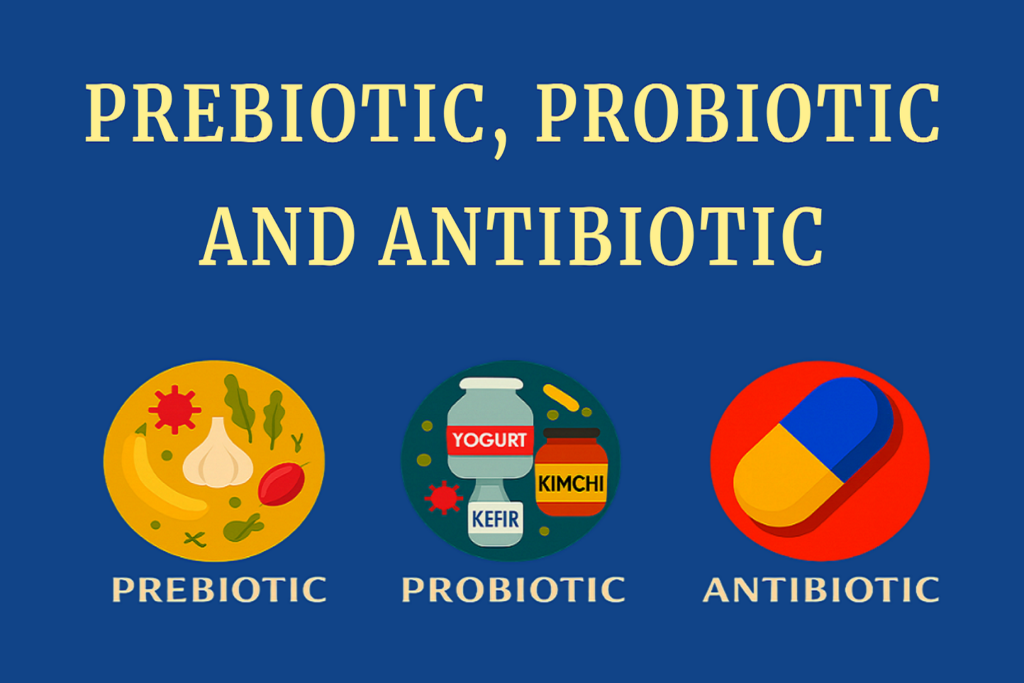
Prebiotics are polysaccharides found in complex carbohydrates and dietary fibers from plant-based foods, like fruits, vegetables, legumes, grains, and nuts. Research shows that plant-based diets, tailored to human physiology and biology, promote health and help prevent diseases.
Probiotics, on the other hand, are beneficial bacterial strains that improve gut health. Isn’t that amazing that the knowledge of how to prepare probiotics has existed for thousands of years? Foods like sauerkraut, fermented vegetables, yogurt, miso, kombucha, kefir, and fermented wheat water are all examples of probiotics prepared by various cultures throughout history.
Nowadays, you can find dietary supplements and dairy products that contain probiotics. However, it’s better to consume probiotics from homemade sources like fermented vegetables, kombucha, and kefir rather than industrial products.
If speaking about probiotics, which can be found in many stores and pharmacies, the real question is how the industrial probiotic market has grown so big, and why it is projected to keep growing. The answer is simple: that’s because antibiotics changed the whole game.
The Impact of Antibiotics
By now, you must know that fighting bacteria with antibiotics disrupts the ecological balance in the body and gut. Remember how our health and survival depend on the microscopic organisms in our bodies and their interactions with their environment.
When we poison the environment in our bodies with antibiotics that disrupt the microbiome balance, disease-causing bacteria and viruses thrive. Today, doctors recommend taking probiotics before and after antibiotic treatment.
But why do we need treatments that destroy the body’s ecological balance? After all, this contradicts natural laws and ultimately causes the immune system to rebel, resulting in chronic diseases later in life.
Let’s examine the Modern Diet and Gut Health
The Western diet lacks probiotics, which are found only in fresh plant-based foods. Add to this alcohol consumption, smoking, antibiotic use, lack of sleep, and stress, which many people experience, and you’ve got a recipe for gut microbiome destruction.
To this, you can add processed foods, sugar, corn syrup, dairy products, fried foods, artificial sweeteners, meat, flour, and other industrially processed products not only harm the digestive system but also disrupt the balance of good gut bacteria.
So, What Can We Do About It?
As always, there are two options: The first one is to do nothing. Continue eating as usual, rely on medications that don’t cure chronic diseases, and hope a probiotic pill will fix everything. But as you know, shortcuts rarely have a long-term effect.
The second option is to return to the basics: a natural diet provided by the Creator, which is biologically and physiologically suited for us, consisting of fruits, vegetables, legumes, whole grains, nuts, and seeds.
And also, incorporate exercise and positive thinking into your lifestyle, and add to your diet fermented foods like sauerkraut, miso, kombucha, and kefir.
Nutrition is one of the seven fundamentals of health and longevity. If you want to discover more about them, click the link below, and I’ll see you in the presentation.