

Let’s talk about something that affects nearly every person in modern society: addiction and compulsive behavior. These patterns show up in countless forms: shopping, gambling, smoking, sex, internet use, overeating, and even excessive exercise. They’re not just bad habits. They’re deeply rooted psychological responses that shape how we cope with stress, fear, and emotional pain. And while doctors often prescribe medications or recommend behavioral therapy, the truth is, none of these approaches can truly cure addiction. That’s because addiction isn’t just a medical issue; it’s a reflection of our personality, our identity, and how we relate to ourselves and the world around us.
I’ve lived this struggle myself. For years, I battled addictions to nicotine and food. And because I was born with congenital heart disease, I knew those habits were slowly shortening my life. That realization pushed me into a long, difficult journey to find a way out, a path to freedom from addiction that didn’t rely on pills or temporary fixes. What I discovered changed everything.
Today, we understand that addiction and compulsive behaviors originate in the mind. But we usually only become aware of them when they start interfering with our lives, when they make us physically sick, emotionally drained, or spiritually disconnected. We’ve been conditioned to trust science, doctors, and medicine to heal us. But addiction isn’t a disease in the traditional sense. It’s a coping mechanism, a way our personality tries to protect us. And at the center of that mechanism is the ego.
Now, I know some therapists say we should get rid of the ego, control it, or trash it. You might even believe that ego ruins relationships or causes conflict. But according to Freud’s theory of personality, the ego is just one part of a much larger system. Freud believed the mind has three components: the id, which is the most primitive part of the human psyche, driven by unconscious desires and instincts for immediate gratification, the ego, and the superego. Addiction and compulsive behavior arise when these parts conflict, when our primitive instincts, our perception of reality, and our moral values are out of sync.
Understanding Freud’s Model: The Id, Ego, and Superego
Let’s break this down in a way that’s easy to understand. Freud’s model describes the id as the part of our mind that holds primitive instincts. The ego is how we perceive reality. And the superego is where our morals and values live. The id is the most basic part of our brain. It drives our survival instincts, seeking pleasure, avoiding pain, and conserving energy. It also stores our memories and life experiences.
The ego is the realistic part of our mind. It acts as a mediator between the desires of the id and the moral standards of the superego. The superego, shaped by our parents and society, tries to suppress the urges of the id and push the ego to behave morally, not just realistically.
Each part of our personality plays a role in our behavior. The id is impulsive and unconscious. It responds instantly to basic needs and desires. A newborn baby is pure id. If they’re hungry or uncomfortable, they cry until their needs are met. The ego and superego develop later in childhood. The id never changes—it’s not influenced by logic or reality. It operates in the subconscious and constantly seeks pleasure and instant gratification, regardless of the consequences. That’s why we feel anxious or stressed when we’re hungry and there’s no food around.
The ego, on the other hand, is the only part of our personality that operates consciously. It’s what we think of as “ourselves,” and it’s the image we present to others. The ego mediates between the unrealistic demands of the id and the real world. It’s the decision-maker, and it needs logic and reason to act. Unlike the impulsive id, the ego tries to find realistic ways to satisfy our desires. You’ve probably experienced this when you’ve delayed gratification to avoid negative consequences.
Like the id, the ego seeks pleasure and tries to reduce tension and avoid pain. But it does so through realistic strategies. The ego doesn’t care about right or wrong; it just wants satisfaction without harming itself or the id. Unfortunately, the ego is often weaker than the id. That’s why so many of us chase pleasure in ways that damage our health and well-being. When the ego fails to find realistic ways to satisfy the id, stress and anxiety take over.
To cope with these unpleasant feelings, our mind activates unconscious defense mechanisms. The ego then tries to come up with another rational plan. If that doesn’t work, it keeps searching until it finds one. This process allows us to control impulsive behavior and demonstrate self-control. But because the subconscious is much stronger than the conscious mind, addiction is easy to adopt and hard to break. That’s why so many people relapse after quitting.
Now let’s talk about the superego. It’s part of the subconscious mind and serves as our inner moral compass. It guides us to do what’s right, but it’s also the source of self-criticism. The superego reflects society’s values and ethics. It tries to control the id’s impulsive behaviors, especially those that society considers taboo, like sex and aggression.
The superego has two systems: the conscience and the ideal self. The conscience is the voice that tells us when we’ve done something wrong. It can punish the ego by triggering feelings of guilt. For example, if the ego gives in to the id’s demand for overeating, the superego may make us feel guilty afterward. This is one reason why 70 percent of Americans are overweight or obese. The ego wants to control the behavior, but it gives in to the id’s craving for quick pleasure. Afterward, guilt sets in, and the person feels unworthy. That feeling contributes to stress and anxiety.
This internal conflict is common. The urges from the id clash with the prohibitions from the superego. When feelings of unworthiness repeat over time, they get stored in the subconscious. Eventually, the person starts to believe they’re truly unworthy. This belief can lead to self-punishment, destructive behavior, and deeper addiction.
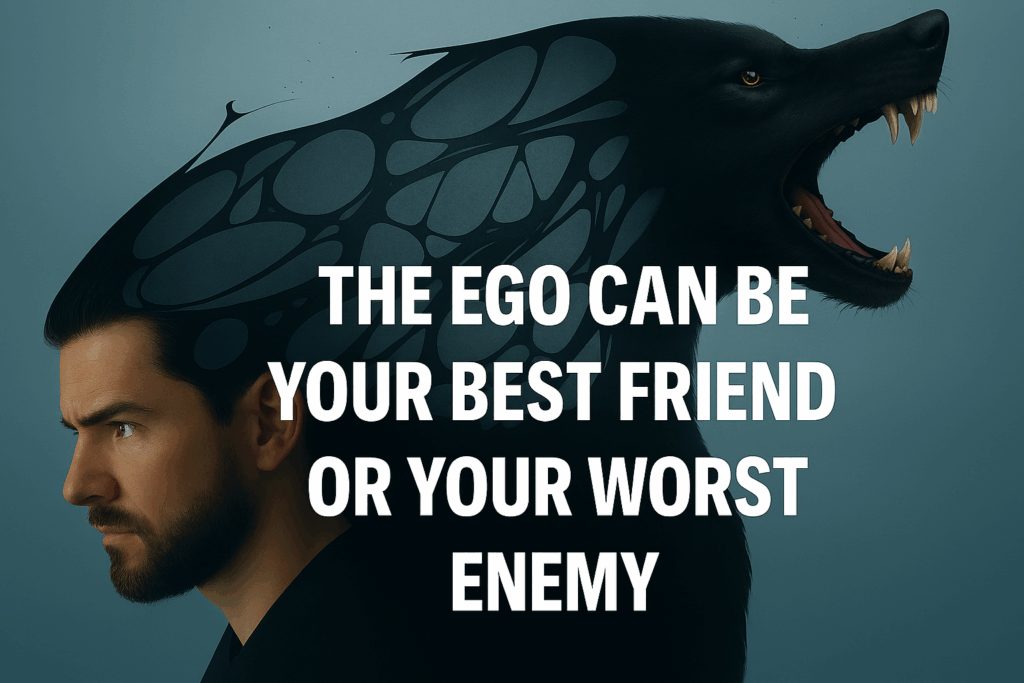
Here’s what I want you to take away from all this: your ego isn’t your enemy. It’s your ally if you learn how to work with it. The ego is the part of you that can negotiate between your instincts and your values. It’s the part that can make decisions, set boundaries, and choose a better path. But it needs to be strengthened. It needs to be trained to resist the impulsive demands of the id and to balance the harsh judgments of the superego.
When your ego is strong, you can face temptation and say no. You can feel stress and not collapse into old habits. You can experience guilt and use it as a signal for growth, not as a weapon against yourself. A strong ego doesn’t mean arrogance. It means clarity, resilience, and self-awareness.
I’ve been there. Every time I quit nicotine, I turned to food. I bounced back and forth between addictions for years. I tried different programs, but I still relapsed. After each relapse, I asked myself the same questions: Why did I fail? What was I doing wrong?
Here’s something important to remember: your beliefs override your desires. If you believe life isn’t worth living without junk food, nicotine, alcohol, or drugs, then even a strong desire to quit won’t be enough. That belief will sabotage your efforts.
The Path to Freedom Starts with Understanding
During my research, I discovered something disturbing. The National Institute on Drug Abuse, which receives massive funding, isn’t focused on finding practical solutions for people struggling with addiction. Instead, they’re chasing profitable drugs and vaccines to “control” addiction. That’s why, when I finally found the escape route to freedom from addiction, when I freed myself and helped others do the same, I realized that my research and the program I created might be the most valuable contribution I can offer to humanity.
If you’re struggling with addiction or compulsive behavior, know this: you’re not broken. You’re caught in a psychological tug-of-war that can be resolved. You don’t need to medicate your way out. You need to understand your mind, strengthen your ego, and rewrite the beliefs that are holding you back.
Below this post, you’ll find a link to my presentation on how to break free from addiction. Click it now and begin your journey to freedom. Just remember: your ego can be your best friend or your worst enemy.
The choice is yours.