


For decades, wine was associated with heart health and longevity. Newer evidence gives regular wine drinkers a very different reason to reconsider that habit.
Many years ago, I learned that alcohol is not good for the human body. It wasn’t just heavy liquor like vodka and whisky, but also beer and wine. I have learned that fresh grapes have the same heart-protecting benefits as wine, but without the damaging alcohol.
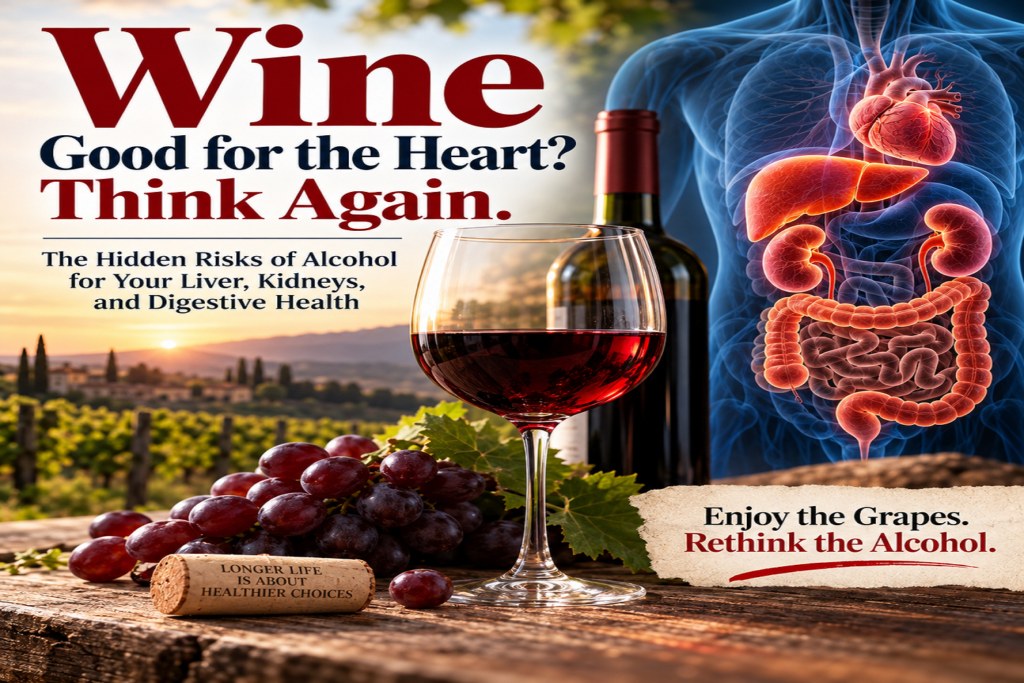
For years, however, we were repeatedly exposed to a different message: a glass of red wine may be good for your heart.
Wine became different from other alcoholic drinks in the public imagination. Vodka was alcohol. Whisky was alcohol. But red wine? That was almost treated like a health food.
The famous “French paradox” helped popularize the idea. Red wine contains plant compounds such as polyphenols, including resveratrol, and observational studies associated moderate wine consumption with lower cardiovascular risk.
But association is not proof of cause.
The American Heart Association now states that research has not established a cause-and-effect relationship between drinking alcohol and better heart health. It also points out that potentially beneficial compounds found in red wine can be obtained from grapes, red grape juice, blueberries, and other foods. The AHA does not recommend drinking wine to obtain cardiovascular benefits.
So if you’re drinking wine several times a week because you believe you’re protecting your heart or increasing your chances of living longer, it’s time to reconsider the evidence.
This article isn’t about having a glass of wine at a wedding, celebrating New Year’s Eve with champagne, or occasionally having a drink with friends.
It’s about repeated alcohol consumption, several times a week or every day, especially when that habit is justified in the name of health and longevity.
Wine Is Still Alcohol
The first thing we need to get straight is remarkably simple:
The alcohol in wine is ethanol.
Your body doesn’t give wine a special exemption because it came from grapes.
The World Health Organization describes alcohol as a toxic, psychoactive, dependence-producing substance. Alcoholic beverages are classified as a Group 1 carcinogen, and alcohol is causally associated with more than 200 diseases, injuries, and other health conditions.
This doesn’t mean one glass of wine guarantees disease. Risk isn’t binary.
Amount matters. Frequency matters. Duration matters. Genetics, age, sex, medications, existing diseases, and other lifestyle factors matter.
But when we’re talking about longevity, we need to distinguish between low risk and no risk.
They aren’t the same thing.
What Happened to the “Wine Is Good for You” Story?
Some observational research suggested that light or moderate drinkers had better cardiovascular outcomes than nondrinkers.
But there is a major problem.
People who drink wine moderately can differ from nondrinkers in many other ways. They may exercise more, eat differently, have higher incomes, receive better medical care, or have other lifestyle characteristics that influence their health.
The American Heart Association’s 2025 scientific statement concluded that evidence about light to moderate alcohol consumption and cardiovascular disease remains mixed. Some observational studies suggest benefits, while other types of evidence do not show a clear protective effect.
Meanwhile, alcohol brings risks unrelated to the heart.
The WHO states that no safe threshold has been established for alcohol-related cancer risk. Even relatively small amounts contribute some risk, and that risk increases with consumption.
So why drink alcohol for compounds that you can obtain without alcohol?
Eat the grapes.
The Damage May Be Cumulative
One of the biggest mistakes we make with lifestyle-related disease is expecting immediate consequences.
You drink tonight.
You wake up tomorrow.
You feel fine.
So you assume nothing happened.
But chronic disease often doesn’t work that way.
Repeated exposure over years can gradually contribute to biological changes long before obvious symptoms appear.
A recent U.S. analysis reported in The Lancet Regional Health, Americas examined more than three decades of data. According to the researchers, annual U.S. cancer deaths attributable to alcohol increased from 11,361 in 1990 to 23,126 in 2023, more than doubling. The researchers associated alcohol with deaths from multiple cancers, including liver, colorectal, breast, esophageal, pancreatic, stomach, and head and neck cancers.
The study was observational, so it cannot by itself prove individual cause and effect. But its findings add to an already substantial body of evidence linking alcohol with cancer.
And the biological mechanisms are important.
When your body metabolizes ethanol, it produces acetaldehyde, a toxic compound that can damage DNA. Alcohol is also associated with oxidative stress, inflammation, hormonal changes, and changes to the gut microbiome.
That is a very different picture from the romantic image of red wine as medicine.
Your Liver Takes the Hit
The liver performs most alcohol metabolism, which is why long-term alcohol exposure can be particularly damaging to it.
Repeated excessive consumption can contribute to fatty liver, inflammation, fibrosis, cirrhosis, and liver cancer.
According to the National Institute on Alcohol Abuse and Alcoholism, about 44.5% of U.S. liver-disease deaths in 2023 involved alcohol.
Again, the issue isn’t simply becoming drunk.
You can drink regularly without ever appearing intoxicated and still expose your liver repeatedly to ethanol and its metabolites.
For someone interested in healthy longevity, that distinction matters.
The Gut and Pancreas Matter Too
Alcohol doesn’t travel directly to the liver and politely leave the rest of the digestive system alone.
It interacts with the gastrointestinal tract and can contribute to inflammation and other gastrointestinal problems. Alcohol misuse is also an established cause of pancreatitis, an inflammatory condition that can become chronic. Chronic pancreatitis can impair digestion and glucose regulation and is itself a risk factor for pancreatic cancer and diabetes.
Alcohol can also alter bowel function. Some people experience diarrhea, while others may experience constipation, particularly when alcohol contributes to dehydration or disrupts normal eating and bowel habits.
But I want to make an important distinction here.
I would not claim that constipation itself directly causes liver or pancreatic disease. The evidence doesn’t support making that broad statement.
Chronic constipation should still be taken seriously. It can significantly affect quality of life and may sometimes signal an underlying digestive problem. But we shouldn’t exaggerate one mechanism when alcohol already has well-established direct pathways of harm.
What About the Kidneys?
The kidneys help regulate fluid balance, electrolytes, blood pressure, and the removal of waste products.
Alcohol can interfere with fluid regulation and, particularly at higher levels of consumption, contribute to dehydration and blood-pressure problems.
That doesn’t mean that drinking wine several times a week automatically causes kidney disease. The relationship between moderate alcohol consumption and chronic kidney disease is considerably more complicated than the relationship between alcohol and liver disease.
But if your objective is healthy longevity, asking your body repeatedly to compensate for a substance it must metabolize and eliminate deserves consideration.
The question shouldn’t be:
“Can my body handle this?”
Of course it can handle many exposures.
The better question is:
“Why repeatedly give my body something it has to protect me from?”
Alcohol and Cancer: The Warning Wine Drinkers Should Hear
Perhaps the biggest change in our understanding of alcohol concerns cancer.
Alcohol causes at least seven types of cancer, including cancers of the mouth, throat, esophagus, liver, colorectum, and female breast.
And this isn’t limited to whisky, vodka, or heavy drinking.
The carcinogenic agent is the alcohol itself.
Wine contains it.
Beer contains it.
Liquor contains it.
A beautiful bottle, an expensive vintage, or the antioxidants in red wine do not change the basic chemistry of ethanol.
The WHO summarizes the issue very simply: the less alcohol you drink, the safer it is.
For people interested in longevity, that deserves much more attention than the old promise of “a glass of red wine for your heart.”
The Body Cleanse: One Part of Healthy Longevity
This brings me to Chapter 5 of my book, The 7 Fundamentals for Healthy Longevity, which I call The Body Cleanse.
The first principle of cleansing is simple: stop putting harmful substances into the body.
You cannot reduce the body’s toxic burden while continually adding to it. That means taking an honest look at alcohol, smoking, highly processed foods, and other unnecessary exposures.
But stopping the exposure is only part of the process.
The bowels need to function properly. The liver and kidneys need to be protected and supported so they can perform the work they were designed to do.
And when I talk about cleansing or detoxification, I am not talking about a three-day juice cleanse or some miracle product that supposedly washes years of damage from your body.
Your body already has sophisticated systems for processing and eliminating waste. The goal is to stop overwhelming those systems and create the conditions that allow them to function properly.
This is also why I believe we need to rethink the old advice about drinking wine for our health.
If you occasionally enjoy a glass of wine, that is your choice. But if you’re drinking wine several times a week because you believe it’s protecting your heart or helping you live longer, today’s evidence gives you good reason to reconsider.
You don’t need wine to get the beneficial compounds found in grapes.
Eat the grapes. Leave the alcohol.
And remember, removing alcohol is only one piece of a much bigger picture.
In The 7 Fundamentals for Healthy Longevity, I explain the seven foundations I believe are necessary for protecting your health, reducing unnecessary burdens on the body, and giving yourself a better opportunity not simply to live longer, but to remain healthier as you age.
Discover The 7 Fundamentals for Healthy Longevity →