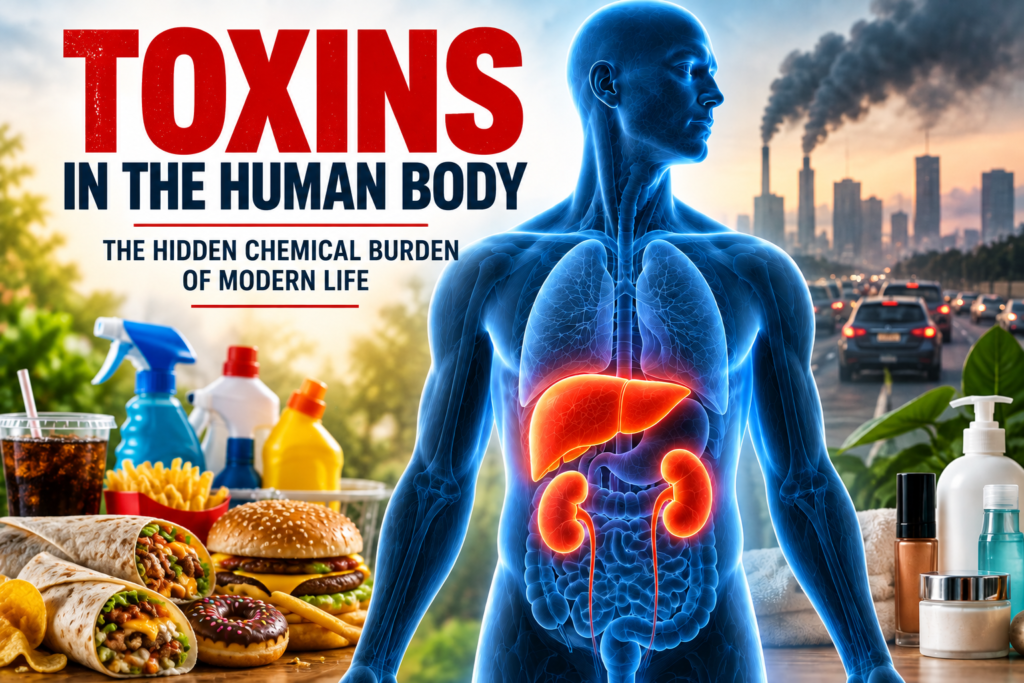



Your body is constantly working to process and eliminate unwanted substances, but the modern environment has created an unprecedented burden of chemical exposure through food, beverages, indoor air, and everyday products.
We often think of toxicity as something that happens only when we are exposed to a dangerous chemical, poison, or contaminated substance.
But modern life presents us with a much more complicated picture. Every day, our bodies encounter thousands of substances from the food we eat, the beverages we drink, the air we breathe, the products we use, and the environments in which we live and work. Some of these substances are harmless at the levels to which we are normally exposed. Others can be harmful depending on the dose, duration, route of exposure, and individual susceptibility.
The important question is not whether we can completely avoid every chemical in the modern world. We cannot. The better question is:
How much unnecessary toxic exposure can we reduce?
Your body already has a detoxification system
Your body is not defenseless. Two organs do most of the heavy lifting: the liver and the kidneys.
The liver is the body’s primary chemical processing plant. It metabolizes nutrients, medications, alcohol, hormones, and a huge range of foreign compounds, transforming many of them into forms the body can safely eliminate. It filters the blood arriving from the digestive tract before that blood reaches the rest of the body, and it works continuously — there is no “off” state for this organ.
The kidneys are the body’s filtration and balance system. They continuously filter the blood, removing metabolic waste products and many foreign chemicals, while regulating water and electrolyte balance so the internal environment stays stable. What the kidneys can’t use, they excrete through urine.
Together with the lungs and the gastrointestinal tract, which also play supporting roles in elimination, the liver and kidneys form an extraordinary system that operates every minute of every day, without our conscious effort.
But there is an important distinction worth making. The liver and kidneys evolved to perform these functions as part of human physiology. They did not evolve in an environment containing the enormous variety of manufactured chemicals that modern society can produce and distribute. That does not mean the human body is incapable of handling modern chemicals. It means our exposure environment has changed dramatically, and some substances can place additional demands on these systems, or cause harm, when exposure is sufficiently high or prolonged. These organs are not disposable filters — they are living, working systems, and we should avoid creating unnecessary work for them whenever practical.
The goal, therefore, is not to fear every chemical we encounter. It is to become more conscious of our total exposure, and to support the organs already doing this work on our behalf.
Toxicity can enter through food
Food is one of the most obvious routes by which substances enter the body — and here we need to make an important distinction. Not everything in food that sounds chemical is a poison. Many food additives are regulated and considered safe at approved levels, and ingredients are generally listed on food labels.
At the same time, food can contain naturally occurring toxins, environmental contaminants, pesticide residues, and compounds created during processing or cooking. The FDA identifies several categories, including mycotoxins produced by certain molds, acrylamide (which forms when carbohydrate-rich foods are cooked at high temperatures), heavy metals such as lead, arsenic, mercury, and cadmium, pesticide residues, and toxins naturally produced by plants, fungi, bacteria, and algae.
Acrylamide illustrates something many people don’t realize: you don’t have to add a chemical to food for a chemical compound to be present — it forms naturally during frying, baking, and roasting. This is why the simplistic idea that something is either “natural” or “chemical” doesn’t help us understand toxicity. Everything is chemistry. The real issue is exposure.
What about soft drinks?
A typical soft drink contains carbonated water, sweeteners, acids, flavorings, colors, and sometimes caffeine or preservatives. That doesn’t make every ingredient a “poison” — an irresponsible way to describe the science.
The bigger concern is what happens when processed beverages become a daily habit. An occasional soda is a very different situation from several large servings every day for decades. That brings us to one of the most important principles in toxicology.
Toxicity is about dose and duration
A substance’s potential to cause harm cannot be understood simply by asking, “Is it toxic?” The more useful questions are: How much? How often? For how long? How does it enter the body?
A substance harmless at a low exposure can become harmful at a high enough dose, and repeated low-level exposure can matter over years. Think about sunlight — a few minutes outside may be beneficial, while excessive exposure damages the skin. Think about alcohol or medications — the response depends on how much, how often, and over what period. The dose makes the poison. Duration matters too.
The air we breathe is another source of exposure
We tend to think of air as simply “air.” But indoor air can contain a mixture of biological, chemical, and particulate pollutants — volatile organic compounds, formaldehyde, pesticides, combustion products, radon, asbestos, and mold.
This is where Sick Building Syndrome and Building-Related Illness become relevant. Sick Building Syndrome describes symptoms — headaches, fatigue, eye or throat irritation, dizziness, difficulty concentrating — associated with time in a particular building, without a specific cause identified. Building-Related Illness is different: a diagnosable illness linked to a specific contaminant. Not every headache is caused by toxins, but indoor environments deserve attention, since most people spend the bulk of their lives indoors, where pollutant concentrations can sometimes exceed outdoor levels.
What about the gym?
This environment deserves more attention. Vigorous exercise means deeper, more frequent breathing — so if the surrounding air contains irritants, our exposure rises simply because our ventilation rate does. A busy gym involves sweat, heavy breathing, constantly touched equipment, disinfected floors and restrooms, air fresheners, and cleaning chemicals.
The point isn’t to panic at the smell of disinfectant — disinfection matters for controlling infectious disease. But “clean” doesn’t automatically mean “healthy air.” Air quality depends on what’s released, how much, and how well the space ventilates. Ventilation and source control are key parts of a healthier indoor environment.
Modern exposure is cumulative
The real challenge isn’t one dramatic exposure — it’s the accumulation of countless small ones throughout everyday life: food, drinks, indoor air, traffic pollution, cleaning products, cosmetics, building materials, workplaces, and more.
Most individual exposures are small, but the body experiences life as a continuous environment, not isolated experiments. That’s why I believe we should ask not only “What disease do I have?” but also “What am I repeatedly exposing my body to?” That question shifts the focus toward reducing unnecessary stress on the body — and in particular on the liver and kidneys, the two organs asked to process most of it.
Supporting the systems that already work for you
None of this means buying expensive detox products or believing a three-day juice cleanse can erase years of unhealthy exposure. The more sensible approach is to reduce exposure at the source, and let your liver and kidneys do what they already do well:
- Eat a diet based primarily on minimally processed foods
- Limit heavily processed foods and sugary beverages
- Avoid unnecessary exposure to tobacco smoke
- Pay attention to indoor air quality, and ventilate when appropriate
- Use cleaning and fragranced products thoughtfully
- Give your body the basic conditions it needs – hydration, sleep, movement, and healthy bowel function — to keep its natural elimination systems running well
The real meaning of cleansing
When I talk about cleansing, I am not talking about a magical process that removes every undesirable substance from the body. I am talking about supporting the body’s natural elimination systems while reducing the sources of unnecessary exposure. That is a very different concept — one built on nutrition, hydration, physical activity, healthy bowel function, adequate sleep, and, perhaps most importantly, reducing unnecessary exposure in the first place.
This is one of the subjects I explore in depth in The 7 Fundamentals for Healthy Longevity, where a full chapter is devoted to cleansing and the body’s natural processes of elimination — what it really means to support the liver and kidneys, and why the popular idea of “detoxing” gets so much of the science wrong. If the themes in this post resonated with you, that chapter takes them further, with the practical framework I’ve built over nearly three decades of studying, researching, and working in this field. I invite you to explore The 7 Fundamentals for Healthy Longevity to go deeper.
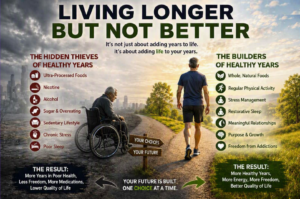
Living longer isn’t enough
Longevity should never be reduced to the number of birthdays you experience. The goal should be to live longer and better — preserving physical function, mental clarity, independence, energy, and the ability to enjoy life.
Toxic exposure is only one part of that equation, but an important one. Some toxic effects improve after exposure stops; others cause lasting or irreversible damage, particularly when exposure is substantial or prolonged. That’s why waiting until the body shows obvious signs of damage isn’t the best strategy. Reduce the exposure before the damage occurs.
Your liver and kidneys are working every day, right now, to keep your internal environment stable. They deserve our support — not because we should fear every substance around us, but because of a simple principle: the body can handle a lot, but that doesn’t mean we should continually challenge it with unnecessary exposure. Healthy longevity begins with reducing the burdens we can control. And sometimes the most powerful health intervention is not adding another supplement, product, or treatment. It is removing something unnecessary from our daily lives.