
For generations, increasing life expectancy has been considered one of medicine’s greatest achievements. People today are living longer than ever before. But there is an uncomfortable truth hiding behind those statistics.
Living longer does not necessarily mean living better.
A recent study published in The Lancet Public Health found that while global life expectancy continues to rise, the number of years people spend in good health is not keeping pace. In many developed countries, people now spend approximately the last 10 to 12 years of their lives living with chronic illness, disability, or reduced independence.
That should make us pause.
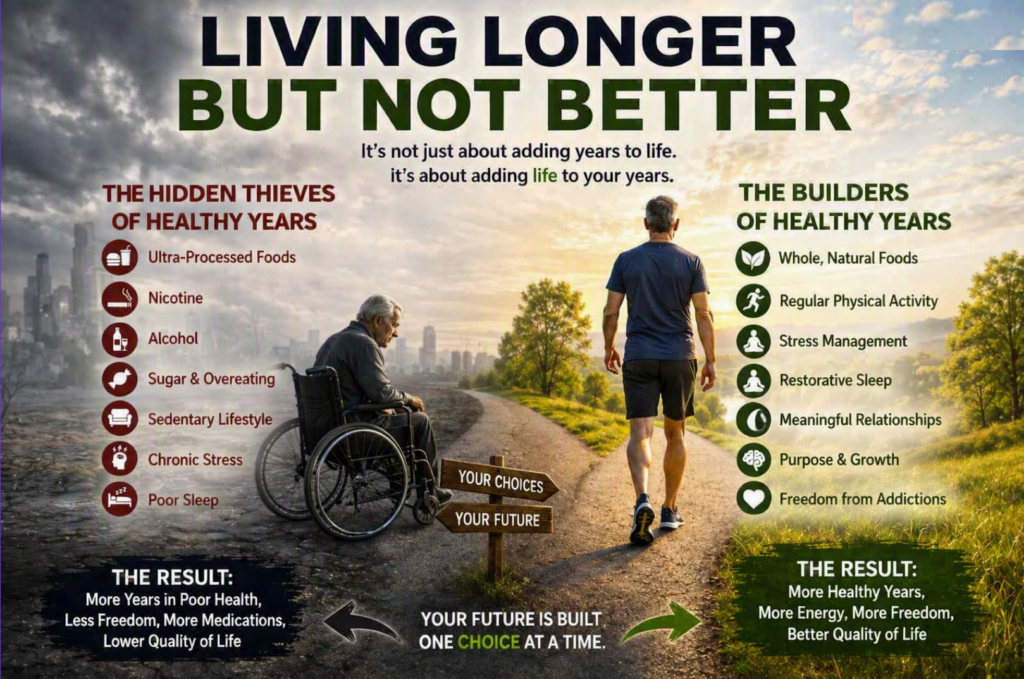
The real goal should not simply be adding years to life. It should be adding healthy years to life.
The Difference Between Lifespan and Healthspan
Most people focus on lifespan – how many years they live.
A far more meaningful measurement is healthspan – the number of years a person remains physically active, mentally sharp, and independent.
Imagine two people who both live to age 90.
One spends the last two years dealing with declining health.
The other spends the last twelve years moving from one doctor’s appointment to another while managing diabetes, heart disease, arthritis, obesity, kidney problems, or cognitive decline.
Both reached the same age.
Only one truly experienced healthy longevity.
Why Are We Spending More Years Sick?
Modern medicine has become incredibly successful at keeping people alive.
Once fatal heart attacks are now survivable.
Many cancers can be treated.
Blood pressure, cholesterol, and diabetes can often be controlled with medication.
These advances deserve recognition.
However, medicine is largely designed to manage disease, not eliminate the lifestyle habits that cause many chronic diseases in the first place.
As a result, millions of people survive longer while accumulating multiple chronic conditions that reduce their quality of life.
The Role Addiction Plays
When people hear the word addiction, they usually think about alcohol, cigarettes, or illegal drugs.
But addiction often wears a much more acceptable face.
Ultra-processed foods.
Sugary drinks.
Constant snacking.
Overeating.
Alcohol.
Nicotine.
These habits become daily routines that quietly damage the body year after year.
Unlike an accident or an infection, addiction usually doesn’t destroy health overnight.
It slowly changes the body’s biology.
Blood sugar becomes unstable.
Inflammation increases.
Blood vessels become damaged.
Fat accumulates around vital organs.
The gut microbiome becomes less diverse.
Over time, these changes increase the risk of obesity, type 2 diabetes, cardiovascular disease, fatty liver disease, certain cancers, and cognitive decline.
Many of the diseases that fill our final decade of life begin decades earlier through habits we barely notice.
Addiction Steals Healthy Years
People often ask whether addiction shortens life.
Sometimes it does.
But more often, it shortens healthy life.
A person may live well into their eighties while spending the last ten or fifteen years dependent on medications, struggling with mobility, or losing their independence.
That is not healthy aging.
It is often the cumulative result of lifestyle choices repeated thousands of times.
Every cigarette.
Every highly processed meal.
Every day without movement.
Every excuse to postpone change.
These small decisions compound over years.
Healthy Longevity Begins Long Before Old Age
Many people think they can ignore their health until retirement.
The body doesn’t work that way.
Our future health is built one day at a time.
Healthy longevity depends on habits practiced consistently over decades.
That includes:
- Eating mostly whole, minimally processed foods.
- Staying physically active.
- Maintaining a healthy body weight.
- Sleeping well.
- Managing stress.
- Breaking harmful addictions before they become chronic disease.
None of these choices is dramatic on its own.
Together, they determine whether our later years are filled with vitality or disability.
Freedom Is More Than Living Longer
One reason I wrote Unshackled: Breaking Free from Addiction and Emotional Slavery is because addiction affects far more than substance abuse.
Addiction gradually takes away freedom.
Freedom to move comfortably.
Freedom from medications.
Freedom from chronic pain.
Freedom to travel.
Freedom to play with grandchildren.
Freedom to enjoy retirement rather than simply survive it.
Breaking addiction isn’t only about avoiding disease.
It’s about protecting the quality of the years ahead.
It’s Never Too Late
The encouraging news is that the body has an extraordinary ability to recover.
People who improve their nutrition, become physically active, stop smoking, reduce alcohol consumption, and maintain a healthy weight often lower their risk of chronic disease, even later in life.
No one can stop aging.
But many of the diseases we associate with aging are strongly influenced by the way we live.
That means the future is not completely determined by genetics.
It is shaped, day after day, by our habits.
The Question Worth Asking
Instead of asking,
“How long do I live?”
Perhaps we should ask,
“How many of those years do I want to live independently, actively, and with purpose?”
Living longer is a remarkable achievement.
Living longer while remaining healthy is an even greater one.
That is the true meaning of healthy longevity.