


For years, the gut microbiome has dominated conversations about health. We now know that the trillions of bacteria living in our digestive system influence digestion, immunity, metabolism, mood, body weight, and even the risk of chronic diseases.
But another biological system is beginning to receive the attention it deserves, one that may be just as important and perhaps even more fundamental.
It is called the glycobiome.
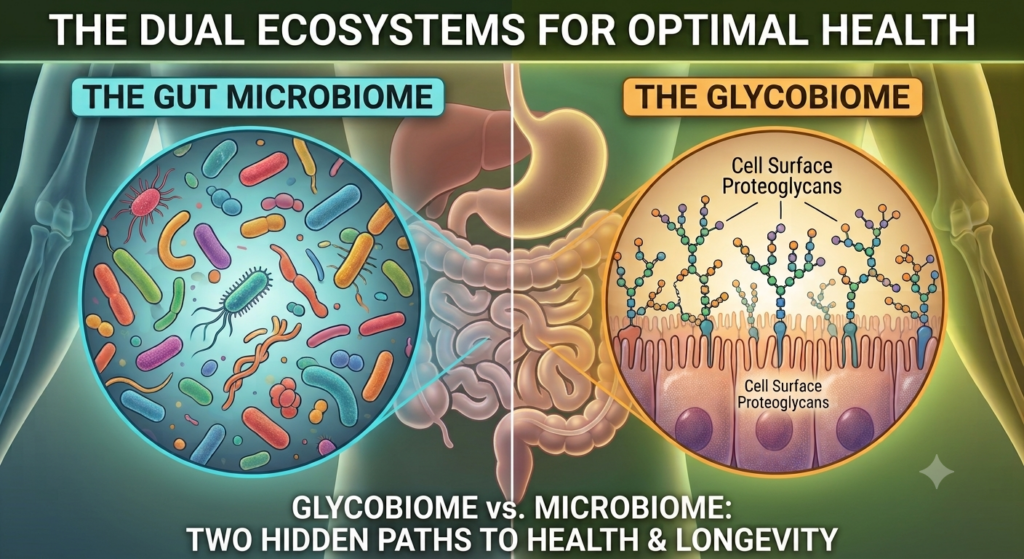
While the microbiome consists of microorganisms that live inside and on our bodies, the glycobiome refers to the complex network of sugars, known as glycans, that coat every cell in the human body. These sugar molecules form a protective layer called the glycocalyx, which plays an essential role in cell communication, immune function, inflammation, vascular health, and tissue repair.
Together, the microbiome and glycobiome form two interconnected ecosystems that influence nearly every aspect of human health. When both are healthy, the body functions as nature intended. When either one is damaged, chronic disease often follows.
Understanding how these two systems work together may become one of the most important keys to healthy longevity.
What Is the Microbiome?
The human microbiome consists of trillions of bacteria, viruses, fungi, and other microorganisms that live primarily in the digestive tract.
Although bacteria often receive a bad reputation, most gut microbes are beneficial and perform vital functions that humans cannot perform on their own.
Among their many responsibilities, beneficial bacteria:
- Digest dietary fiber.
- Produce short-chain fatty acids such as butyrate.
- Manufacture certain vitamins, including vitamin K and several B vitamins.
- Strengthen the intestinal barrier.
- Train and regulate the immune system.
- Help control inflammation.
- Protect against harmful bacteria.
- Influence hormones and neurotransmitters.
Scientists estimate that the human gut contains more microbial cells than human cells, creating an ecosystem that behaves almost like another organ.
When the balance of bacteria is disturbed, a condition known as dysbiosis develops. Dysbiosis has been associated with obesity, type 2 diabetes, inflammatory bowel disease, allergies, autoimmune diseases, cardiovascular disease, depression, and even neurodegenerative disorders.
What Is the Glycobiome?
Unlike bacteria, the glycobiome is not made of living organisms.
Instead, it is composed of thousands of complex sugar structures called glycans.
These glycans cover virtually every cell in your body.
Imagine every cell wearing an intelligent protective coat that constantly communicates with neighboring cells, immune cells, hormones, nutrients, and even bacteria.
That protective coat is called the glycocalyx.
The glycocalyx serves many important functions:
- Protects cells from physical damage.
- Helps cells recognize one another.
- Regulates immune responses.
- Controls inflammation.
- Protects blood vessels.
- Supports wound healing.
- Influences infection resistance.
- Helps regulate blood clotting.
Far from being “just sugar,” glycans function as one of the body’s most sophisticated communication systems.
The Glycocalyx: Your Invisible Protective Shield
Perhaps nowhere is the glycocalyx more important than inside your blood vessels.
Every blood vessel is lined with a delicate glycocalyx that protects the endothelial cells underneath.
When healthy, this layer:
- Reduces inflammation.
- Prevents excessive clotting.
- Helps regulate blood pressure.
- Controls the movement of nutrients.
- Protects arteries from damage.
When damaged, problems begin.
Researchers now believe glycocalyx damage contributes to:
- Atherosclerosis
- Hypertension
- Diabetes
- Kidney disease
- Heart disease
- Stroke
In many ways, protecting the glycocalyx means protecting the cardiovascular system itself.
How the Microbiome and Glycobiome Work Together
Although they are different systems, they constantly interact.
Beneficial bacteria actually feed on certain glycans.
At the same time, glycans help determine which bacteria can attach to the intestinal lining.
This creates a dynamic partnership.
Healthy bacteria produce metabolites such as butyrate that strengthen the intestinal barrier.
Meanwhile, the glycocalyx protects intestinal cells from injury while helping maintain communication between microbes and the immune system.
If one system begins to fail, the other usually follows.
What Causes the Microbiome to Vanish?
Modern life has not been kind to our gut bacteria.
Several factors dramatically reduce microbial diversity.
Ultra-processed foods
Highly processed foods are often low in fiber and high in refined carbohydrates, unhealthy fats, additives, emulsifiers, preservatives, and artificial sweeteners.
Beneficial bacteria literally starve when dietary fiber disappears.
Excess sugar
Large amounts of added sugars encourage the growth of less desirable bacteria while reducing microbial diversity.
Antibiotics
Although lifesaving, when necessary, antibiotics also destroy beneficial bacteria.
Sometimes the microbiome requires months to recover.
Chronic stress
Long-term stress changes intestinal motility, immune function, and bacterial balance.
Lack of plant foods
Most people consume far fewer plant foods than their ancestors.
Since different bacteria require different fibers, a limited diet creates a limited microbiome.
Alcohol
Heavy alcohol consumption damages both intestinal bacteria and the intestinal barrier.
Lack of physical activity
Exercise promotes greater microbial diversity and increases beneficial bacterial species.
What Damages the Glycobiome?
Although research is still developing, scientists already recognize several major threats.
Chronic inflammation
Persistent inflammation gradually damages glycocalyx integrity.
High blood sugar
Elevated glucose is particularly harmful to the endothelial glycocalyx.
This is one reason diabetes accelerates vascular disease.
Smoking
Smoking generates oxidative stress that damages blood vessels and the glycocalyx.
Ultra-processed foods
Many processed foods promote inflammation and oxidative stress, two major enemies of the glycocalyx.
High blood pressure
Excessive pressure inside the arteries physically stresses the glycocalyx.
Oxidative stress
Free radicals gradually break down protective glycocalyx structures.
Sedentary lifestyle
Healthy blood flow from regular exercise helps maintain the integrity of the glycocalyx.
How to Help Both Flourish
Fortunately, the same healthy lifestyle supports both systems.
Eat plenty of fiber
Vegetables
Fruits
Beans
Legumes
Whole grains
Seeds
Nuts
These provide the food beneficial bacteria need.
Eat a wide variety of plants
Research suggests that consuming 30 or more different plant foods each week encourages greater microbial diversity.
Include fermented foods
Foods such as yogurt, kefir, sauerkraut, kimchi, and fermented vegetables introduce beneficial microorganisms and support gut health.
Reduce ultra-processed foods
Replacing processed foods with whole foods reduces inflammation while feeding beneficial bacteria.
Exercise regularly
Physical activity improves circulation, enhances microbial diversity, and supports vascular health.
Sleep well
Healthy sleep supports immune function, bacterial balance, and tissue repair.
Manage stress
Meditation
Prayer
Walking
Breathing exercises
Time in nature
Strong social relationships
All help regulate hormones that influence both systems.
Avoid smoking
Few lifestyle choices damage both the microbiome and glycocalyx more than smoking.
The Role of Aloe Vera
One natural plant that deserves special attention is Aloe vera.
For centuries Aloe vera has been used to support digestive health.
Its gel contains polysaccharides, antioxidants, vitamins, minerals, amino acids, and other bioactive compounds.
Emerging research suggests Aloe vera may:
- Support beneficial gut bacteria.
- Help maintain intestinal barrier function.
- Reduce inflammation.
- Protect the digestive lining.
- Support wound healing.
- Provide antioxidant activity.
Although more research is needed regarding its effects on the glycobiome specifically, Aloe vera’s rich polysaccharide content makes it an intriguing area of ongoing scientific investigation.
Healthy Longevity Depends on More Than One System
Modern medicine often focuses on treating diseases after they appear.
Healthy longevity requires protecting the systems that keep disease from developing in the first place.
The microbiome and glycobiome represent two of those systems.
One nourishes us through trillions of beneficial microorganisms.
The other protects every cell through an extraordinary layer of intelligent sugar molecules.
Both can be strengthened.
Both can be damaged.
And both respond remarkably well to the same lifestyle choices.
Whole foods.
Regular exercise.
Healthy sleep.
Stress management.
Avoiding smoking.
Limiting ultra-processed foods.
These are not simply healthy habits.
They are investments in two hidden ecosystems that quietly determine how well we age.
As research continues to uncover the remarkable relationship between the microbiome and glycobiome, one thing is becoming increasingly clear:
Healthy longevity begins long before disease develops. It begins by protecting the biological systems that were designed to keep us healthy in the first place.