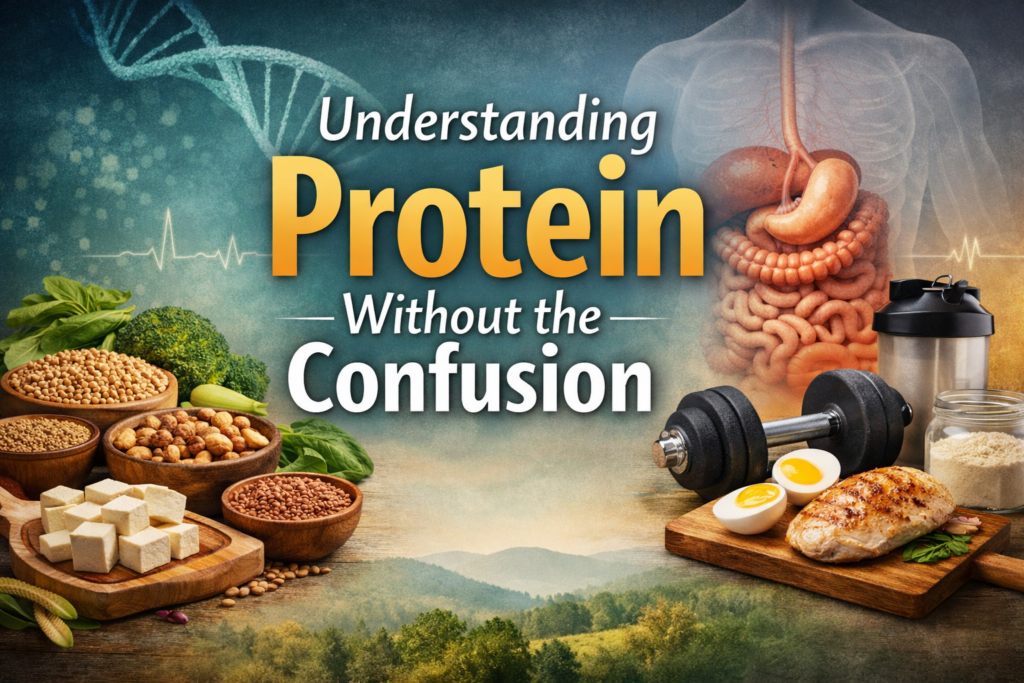

For years, I have repeatedly received the same question from clients: Where will we get protein on a plant-based diet? Closely following that question is another one: What can replace meat, poultry, fish, eggs, and dairy, which we were told are the best and most reliable protein sources?
The truth is that few topics in nutrition have created as much confusion as protein. Despite decades of scientific progress, outdated ideas still dominate public conversation. Protein has become surrounded by fear, exaggeration, and marketing myths. It is time to step back, clarify what protein really is, how the body uses it, how much we truly need, and whether animal protein is biologically necessary.
What Protein Really Is
The word protein comes from the Greek word proteios, meaning “of primary importance.” That name is well deserved. Protein is essential to life. It forms the structure of muscles, organs, skin, and connective tissue. Enzymes that drive metabolism are proteins. Many hormones are proteins. Antibodies that protect us from infection are proteins. Without protein, life cannot exist.
However, the body does not use protein in the form we eat it. During digestion, all proteins, whether from plants or animals, are broken down into amino acids. These amino acids enter a shared amino acid pool in the bloodstream. From that pool, the body builds exactly the proteins it needs at any given moment: muscle fibers, enzymes, neurotransmitters, hormones, immune cells, hair, nails, and skin.
From a physiological perspective, the body does not recognize steak protein versus lentil protein. It only recognizes amino acids.
The Myth of Meat and Strength
One of the most deeply ingrained beliefs is that strength, endurance, and peak athletic performance depend on eating large amounts of meat. This idea is so common that it is rarely questioned. Yet real-world examples consistently challenge it.
Many elite athletes have followed vegetarian or vegan diets during their careers, including Olympic champions, endurance athletes, and strength competitors. Their success demonstrates that high performance does not depend on meat consumption. Strength and endurance are built through training, recovery, adequate calories, and sufficient nutrients, not through animal protein alone.
Even in nature, the strongest animals on Earth, elephants, gorillas, oxen, horses, and bison, build enormous muscle mass entirely from plants. Their strength comes from calories, minerals, and amino acids synthesized through plant foods.
This does not mean meat automatically weakens performance, but it does mean meat is not required for strength, endurance, or athletic excellence.
Protein Needs and Physical Activity
Another persistent myth is that physically active people need more protein than sedentary individuals. While extreme training may modestly increase protein requirements, research consistently shows that the difference is smaller than most people believe.
During exercise, the body primarily burns carbohydrates and fats for energy, not protein. Protein’s role is structural and functional, not fuel-based. In fact, excessive protein intake can increase metabolic workload because surplus amino acids must be broken down and excreted.
What matters more than high protein intake is overall energy intake, nutrient density, hydration, and recovery.
Protein and Long-Term Health
Large population studies over many decades have shown consistent patterns. Diets heavily centered on animal protein, particularly red and processed meat, are associated with higher rates of cardiovascular disease, certain cancers, kidney strain, and reduced life expectancy.
In contrast, populations that traditionally consumed diets rich in whole plant foods, fruits, vegetables, legumes, grains, and minimal animal products often showed lower rates of chronic disease and longer lifespans.
These outcomes are not explained by protein alone. Fiber intake, antioxidant exposure, fat quality, calorie balance, and lifestyle factors all play major roles. Still, protein source appears to matter, especially when consumed in excess.
How Much Protein Do Humans Really Need?
One of the most overlooked facts about protein is how little is actually required for growth and maintenance.
Human breast milk contains roughly 5 percent protein, yet it supports rapid growth, immune development, and brain development in infants. After infancy, protein needs decline, not increase.
Modern nutrition guidelines generally estimate adult protein needs at about 0.8 grams per kilogram of body weight per day, which equals roughly 50–60 grams per day for most adults. Active individuals may need slightly more, but most people in Western countries already consume far beyond these levels, often 90–120 grams per day.
The issue today is not protein deficiency. It is protein excess, often paired with low fiber intake.
The Risks of Excess Protein
Unlike carbohydrates and fats, the body has no storage system for protein. Excess amino acids must be broken down, producing nitrogen waste that the liver and kidneys must process.
Chronically high protein intake has been associated with:
- Increased kidney workload, especially in vulnerable individuals
- Dehydration due to higher water requirements for waste removal
- Increased calcium loss through urine
- Digestive issues caused by low fiber intake
- Disruption of gut microbiome balance
When protein intake comes primarily from animal foods, these effects may be amplified due to higher saturated fat content and the absence of fiber.
In recent years, high-protein diets have been aggressively marketed, often through social media. Diets that emphasize large portions of meat, dairy, and protein supplements promise fat loss, muscle gain, and mental clarity.
While some individuals may experience short-term benefits, these approaches often overlook long-term consequences. Many people following such diets consume excessive protein while neglecting fiber, antioxidants, and plant diversity, key elements of digestive and metabolic health.
Nutrition is not one-size-fits-all, and rigid dietary rules promoted online rarely account for individual physiology.
Why the “Complete Protein” Myth Persists
For decades, people were taught that plant foods are “incomplete” and must be carefully combined at every meal to form “complete protein.” This belief originated from early 20th-century animal studies that do not reflect human physiology.
The human body does not require all essential amino acids in one meal. It maintains amino acid reserves and balances intake over time. As long as total calorie intake is adequate and plant foods are varied, essential amino acid needs are met naturally.
Legumes, grains, vegetables, nuts, and seeds all contribute amino acids. Over the course of a day, or even several days, the body efficiently assembles what it needs.
It is essential to understand this simple truth: the body builds its own proteins.
Dietary protein is dismantled into amino acids. These amino acids are reused and reassembled according to the body’s needs. Whether those amino acids originate from beans, grains, vegetables, or animal foods is far less important than their availability and balance.
This makes a strong case for diets that emphasize whole, minimally processed plant foods, which supply amino acids alongside fiber, vitamins, minerals, phytonutrients, and water.
Do We Need Animal Protein at All?
From a biological perspective, there is no absolute requirement to consume animal protein if:
- Total calorie intake is adequate
- Plant foods are varied
- Essential nutrients such as vitamin B12 are addressed appropriately
People may choose to eat animal foods for cultural, personal, or transitional reasons. But those choices are not driven by an inability of the human body to build protein without meat.
Why Plant-Based Sources Make Sense
Plant-based foods offer unique physiological advantages that go far beyond protein alone. When amino acids come from fruits, vegetables, legumes, whole grains, nuts, and seeds, they arrive packaged with fiber, which is essential for healthy digestion, regular elimination, and toxin removal. Fiber also feeds beneficial gut bacteria, supporting a diverse and balanced microbiome that plays a central role in immunity, metabolism, and even mental health.
Unlike heavy animal proteins, plant foods place a lower metabolic burden on the liver and kidneys, which must otherwise work harder to process excess nitrogen and acidic waste. Plant-rich diets are also associated with lower systemic inflammation, a key factor in the development of cardiovascular disease, diabetes, arthritis, and other chronic conditions.
From a biological efficiency standpoint, plant foods provide the amino acids the body needs while simultaneously supporting digestion, circulation, detoxification, and long-term health, making them a smart and sustainable foundation for human nutrition.
The Bottom Line
Protein is essential, but it has been misunderstood, exaggerated, and commercialized. The body does not need large quantities of animal protein to thrive. It needs amino acids, balance, fiber, and nutrient diversity.
If the body builds its own proteins from a shared amino acid pool, and if those amino acids are abundant in plant foods, then eating protein-rich animal foods is a choice, not a necessity.
The real question is not “Where do I get protein?”
It is “What kind of diet best supports digestion, detoxification, resilience, and long-term health?”
When that question is answered honestly, protein myths begin to dissolve, and clarity returns.
The question of protein is only one small piece of the larger nutrition puzzle. True health begins with understanding how the digestive system is built, how food is broken down, how nutrients are absorbed, and how lifestyle choices influence every stage of this process. In my book, The 7 Fundamentals for Healthy Longevity, I dedicate an entire chapter to digestion, nutrition, absorption, and the principles that support the body’s natural ability to heal and thrive.If your goal is not just to live longer, but to reach your later years with strength, clarity, and vitality, this knowledge is essential. Click here and take a meaningful step toward the gift of lasting health.