



Kombucha isn’t new, but it sure feels like it lately. From hip cafés to yoga studios to entire supermarket aisles, kombucha has gone mainstream. But long before it was bottled in fancy glass jars with labels like “probiotic powerhouse” or “gut-friendly elixir,” it was quietly bubbling in kitchens thousands of years ago.
In this deep dive, we’re breaking down what kombucha is, where it came from, why people swear by its health perks, what nutrients it actually contains, and how you can make it at home without needing a lab or a trust fund.
What Is Kombucha, Really?
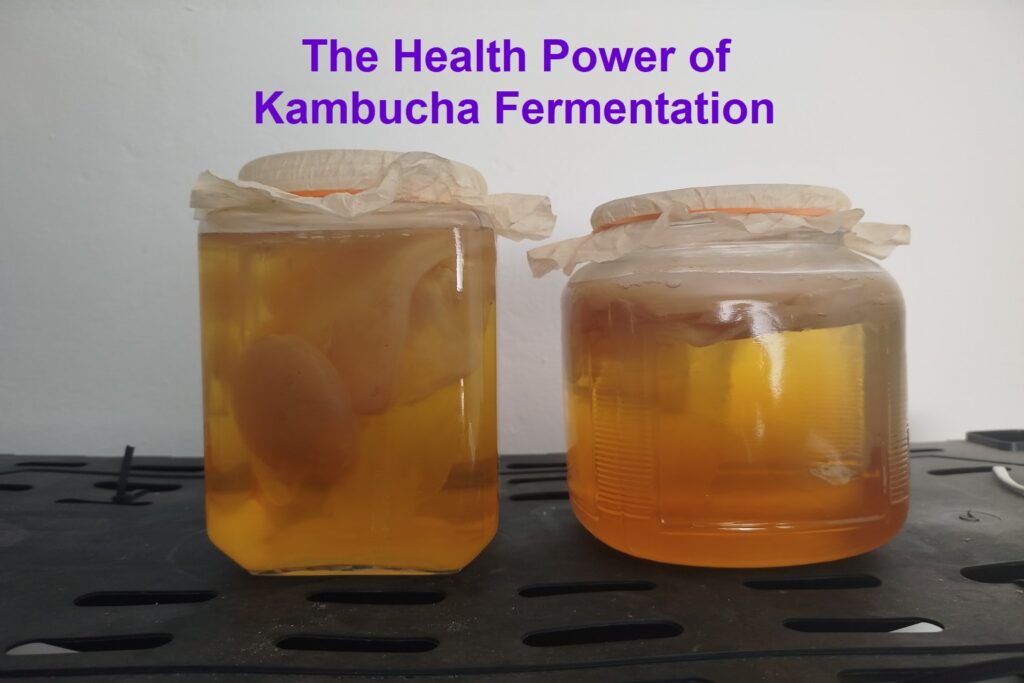
Kombucha is a fermented tea. That’s it. At its core, it’s just tea, sugar, and a SCOBY (Symbiotic Culture Of Bacteria and Yeast). You mix sweet tea with the SCOBY, let it ferment for 7–14 days, and boom you’ve got kombucha. During fermentation, the yeast and bacteria in the SCOBY break down the sugar and produce a mix of acids, gases, enzymes, and probiotics. The result is a slightly sweet, slightly tart, fizzy drink that tastes like a cross between iced tea and apple cider vinegar.
A Brief History of Kombucha
Kombucha’s exact origin is hazy – it predates most written records, but historians generally trace it back to Northeast China, around 220 B.C., where it was prized as a health tonic. It was known as the “Tea of Immortality.”
From there, it spread:
- Japan (circa 400 A.D.): Legend says a Korean physician named Dr. Kombu brought the fermented tea to Japan to treat Emperor Inyoko, and the drink took its name from him – “Kombu’s tea.”
- Russia and Eastern Europe: In the early 1900s, it gained popularity in Russia, where it was called “tea kvass.” Russians even studied its antibacterial properties in the 1920s and ‘30s.
- Germany (1920s-1930s): The drink caught on in Germany, spurred by alternative medicine circles.
- United States (1990s-present): Kombucha was a fringe health drink in the ‘90s, but by the 2010s, it exploded in popularity due to the gut health and wellness boom.
Today, the global kombucha market is worth over $2 billion, with major beverage brands now investing in their own versions.
The Health Benefits of Kombucha
Let’s be clear: kombucha isn’t a miracle drink. It’s not going to fix your digestion overnight or reverse chronic diseases by itself. But there is real science behind some of the claims, especially when it comes to gut health, immune support, and antioxidants.
Here are the main health benefits that kombucha offers, when made and consumed properly.
1. Probiotics and Gut Health
The biggest reason people drink kombucha? Probiotics.
During fermentation, the SCOBY produces live beneficial bacteria, including strains like Lactobacillus and Acetobacter. These bacteria can support your gut microbiome – the ecosystem of microorganisms in your digestive tract that impacts digestion, immunity, inflammation, and even mood.
A healthy gut microbiome can:
- Improve digestion
- Reduce bloating and gas.
- Support immune function
- Influence mental health via the gut-brain axis.
Keep in mind, though: not all store-bought kombucha contains live cultures. Some are pasteurized, which kills the probiotics. Always check for “raw,” “unpasteurized,” or “contains live cultures” on the label if gut health is your goal.
2. Antioxidants
Kombucha is made from green or black tea, both of which are rich in antioxidants, particularly polyphenols like catechins and theaflavins. These compounds fight oxidative stress in the body, which is linked to aging, chronic disease, and cellular damage.
Studies suggest that fermentation may increase antioxidant activity in kombucha compared to regular tea.
3. Potential Antimicrobial Properties
Kombucha contains acetic acid (like vinegar), which has been shown to suppress the growth of certain harmful bacteria and yeasts. While it won’t replace antibiotics, it may contribute to keeping your gut ecosystem balanced.
4. Kombucha May Kill Harmful Bacteria
The acetic acid and other compounds produced during fermentation don’t just promote good bacteria – they can also inhibit harmful ones. Lab studies show that kombucha can suppress pathogens like E. coli, Salmonella, and Listeria. These effects are stronger in kombucha made with black or green tea, which have additional antimicrobial properties of their own.
5. Kombucha May Reduce Heart Disease Risk
Animal studies suggest kombucha may help lower LDL cholesterol (the “bad” kind) and increase HDL cholesterol (the “good” kind), both of which are key markers for heart disease risk. Kombucha made with green tea may be especially helpful, as green tea is known to improve blood lipid profiles and reduce blood pressure in humans. More research is needed in people, but early signs are promising.
6. Kombucha May Help Manage Type 2 Diabetes
Some small animal studies have shown that kombucha can slow the digestion of carbs and reduce blood sugar levels, particularly when made with green tea. The antioxidants and polyphenols in tea may also improve insulin sensitivity. While not a substitute for medication or a balanced diet, kombucha may offer some support for blood sugar regulation, especially in unsweetened or lightly sweetened forms.
7. Kombucha May Help Protect Against Cancer
Emerging lab studies suggest that kombucha may help inhibit the growth of cancer cells, largely due to its rich mix of antioxidants and bioactive compounds. In particular, substances like glucuronic acid, gluconic acid, D-saccharic acid 1,4-lactone (DSL), acetic acid, ascorbic acid, succinic acid, and vitexin have demonstrated anti-cancer potential in test-tube experiments.
These compounds appear to interact with several cancer-related protein targets, including HIF-1α, VEGF, IL-8, COX-2, and caspases-3, -8, and -9, as well as regulators like PARP, Bax, Bcl-2, p53, p21, MMP-2, MMP-9, and β-actin, all of which play roles in cell survival, apoptosis, inflammation, and metastasis.
Although no human trials have confirmed these effects yet, the biochemical activity observed in lab settings indicates that kombucha could have supportive benefits in cancer prevention. It’s not a treatment or cure, but it’s a promising area for future research.
Nutrients in Kombucha
While kombucha isn’t a vitamin-packed super drink, it does contain a few key nutrients thanks to its base ingredients (tea + sugar + fermentation).
Here’s what you’ll typically find in an 8-oz (240 ml) serving of raw, unflavored kombucha:
| Nutrient | Amount |
| Calories | 30–45 |
| Sugar | 2–6 grams (varies by brand) |
| Carbohydrates | 7–10 grams |
| Caffeine | 10–25 mg |
| Probiotics | 1–2 billion CFUs (avg.) |
| B Vitamins | Small amounts of B1, B2, B6, B12 |
| Acetic, gluconic, and glucuronic acids | Trace amounts |
| Antioxidants (polyphenols) | Moderate to high, depending on the tea |
Note: These numbers vary depending on the tea used, fermentation time, and how much sugar is left after brewing.
Also, flavored kombucha may contain:
- More sugar
- Juice or fruit purées
- Herbs, spices, or extracts
- Natural flavors or carbonation
If you’re watching your sugar intake, read labels carefully. Some commercial kombuchas contain up to 15g of sugar per bottle.
Is Kombucha Safe?
Generally, yes for most healthy adults. But there are a few things to watch out for:
1. Alcohol Content
Fermentation produces a small amount of alcohol. Most kombucha sold commercially contains under 0.5% ABV, which is legally non-alcoholic. However, homebrewed kombucha can reach 1–3% ABV or more if left to ferment too long.
If you’re pregnant, breastfeeding, or avoiding alcohol for any reason, check the label or consult your doctor.
2. Acidity
Kombucha is acidic, with a pH of around 2.5–3.5. That’s similar to vinegar or lemon juice. While this is fine in moderation, too much could:
- Irritate the stomach or worsen acid reflux
- Erode tooth enamel over time (use a straw and rinse your mouth if you drink it daily)
3. Home Brewing Risks
If brewed in unsanitary conditions, kombucha can become contaminated with harmful bacteria or mold. Always use clean equipment and sterile containers.
People with weakened immune systems or certain health conditions should be especially cautious with homemade batches.
How to Make Kombucha at Home: A Simple Recipe
Ready to try brewing your own? It’s easier than it sounds, and a lot cheaper than buying it bottle by bottle. Here’s a beginner-friendly kombucha recipe.
Ingredients:
- 8 cups (2 liters) water
- 4–6 bags of black or green tea
- 1 cup white sugar
- 1 SCOBY (buy online or get one from a friend)
- 1–1.5 cups starter tea (from a previous batch or store-bought raw kombucha)
Equipment:
- 1 large glass jar (1-gallon)
- Clean cloth or coffee filter + rubber band
- Bottles with airtight lids for storing finished kombucha
Instructions:
Step 1: Make the Sweet Tea
- Bring water to a boil.
- Add tea bags and steep for 10–15 minutes.
- Remove tea bags and stir in sugar until fully dissolved.
- Let cool to room temperature.
Step 2: Add SCOBY and Starter Tea
- Pour cooled tea into your clean jar.
- Add your starter tea.
- Gently place the SCOBY on top.
Step 3: Cover and Ferment
- Cover the jar with a clean cloth or coffee filter.
- Secure with a rubber band.
- Let it ferment at room temperature (around 70–75°F) for 7–14 days.
Step 4: Taste and Bottle
- After 7 days, start tasting daily.
- When it’s tangy but still slightly sweet, it’s ready.
- Remove the SCOBY and 1 cup of kombucha to use as a starter for your next batch.
- Pour the rest into bottles, leaving ½ inch of headspace.
Optional: Add fruit, herbs, or spices for a second fermentation.
Step 5: Second Fermentation (for fizz)
- Seal bottles tightly.
- Let sit at room temp for 2–5 days to build carbonation.
- Refrigerate and enjoy!
On a Personal Note
Kombucha is one of those rare health trends that actually holds up. It’s not a miracle cure, but it’s definitely not a gimmick either. It’s been around for centuries for a reason: it tastes good (once your palate adjusts), it’s full of beneficial bacteria, and it gives your gut, and often your mood, a gentle, natural boost.
If you’re into health, fermentation, or just enjoy drinks with a little edge, kombucha is worth a try. And if you’re thinking about making it at home, go for it. It’s fun, inexpensive, and surprisingly rewarding.
I’ve been brewing kombucha for over thirty years. No matter where I’ve lived, whether overseas or here in the States, I’ve always found a way to order a SCOBY and start a fresh batch. One of my favorite combinations for the second fermentation is fresh juice of sweet apples (like Gala) with ginger. The result is crisp, refreshing, and full of flavor.
Personally, I drink kombucha daily. If your goal is long-term vitality and you’re following my guidelines for the seven fundamentals of healthy longevity, I strongly recommend adding home-brewed kombucha to your routine. It’s a small, consistent habit that can support a healthier gut and potentially a longer, more vibrant life.