


Most people know that water is essential for life, yet few realize how easily unhealthy substitutes can replace it. In a world of soft drinks, bottled water, and high-tech filters, our understanding of hydration has become clouded by marketing, convenience, and misinformation.
This article explores why pure water, just like the other six fundamentals, remains the foundation of health and how modern habits can undermine it.
The Decline of True Hydration
Water is the foundation of life, the medium through which every biochemical process in the body occurs. It regulates temperature, transports nutrients, removes waste, lubricates joints, and fuels every cell. Despite its critical role, many people today live in a state of chronic, low-level dehydration, not because water is scarce, but because it has been replaced with beverages that only mimic hydration while quietly undermining health.
Modern lifestyles have conditioned us to reach for drinks that offer flavor, stimulation, or quick satisfaction rather than genuine hydration. Supermarket shelves overflow with soft drinks, energy drinks, and flavored beverages that promise refreshment but deliver the opposite.
These beverages may temporarily quench thirst, but they are packed with sugar, caffeine, artificial sweeteners, and chemical additives that place tremendous stress on the body.
- Soft drinks often contain more than 10 teaspoons of sugar per can, creating a spike in blood glucose that forces the pancreas to release large amounts of insulin. Over time, this cycle leads to insulin resistance, the foundation of type 2 diabetes and metabolic syndrome.
- Energy drinks are marketed as performance enhancers, yet their high caffeine and sugar content can overstimulate the nervous system, cause irregular heartbeat, and deplete the body’s mineral stores through diuresis (increased urination).
- Flavored waters and sports drinks may appear “healthier,” but many contain artificial colors, preservatives, and chemical flavoring agents that the liver must filter and detoxify.
The Hidden Consequences
At first glance, these drinks seem harmless, especially when consumed occasionally. But over time, they contribute to a wide range of chronic health problems:
- Obesity, diabetes, and heart disease are caused by the body’s constant struggle to metabolize excess sugars and additives.
- Weakened immune function as high sugar intake suppresses white blood cell activity and impairs the body’s natural defense mechanisms.
- Liver and kidney strain since both organs must work overtime to process chemical additives and flush out the excess waste created by dehydration.
- Chronic dehydration occurs because most of these drinks act as diuretics, forcing the body to excrete more water than they provide.
In short, the more we replace pure water with artificial beverages, the more we rob our bodies of the very substance they need most.
Fruit Juice: The Misleading “Healthy” Option
Even fruit juice, long promoted as a health drink, can contribute to dehydration and disease when processed and bottled. Most commercial juices are stripped of fiber and concentrated with sugar. A single glass of orange juice can contain as much sugar as a soda, yet lacks the fiber, enzymes, and antioxidants found in whole fruit.
When consumed regularly, these sugars cause blood sugar spikes and contribute to fatty liver, tooth decay, and weight gain. What’s worse, the body still perceives them as empty calories, leaving thirst and hunger unsatisfied.
Part of the decline in true hydration comes from marketing manipulation. Beverage companies invest billions of dollars each year to associate their products with energy, happiness, and success. Advertisements portray sugary drinks as symbols of youth and vitality, while plain water is seen as dull or flavorless.
This cultural conditioning has shifted our preferences away from nature’s most essential liquid. Children grow up craving sweetened drinks instead of developing a taste for water. As adults, we continue the pattern, reaching for the instant gratification of flavor and caffeine rather than the subtle, sustaining purity of water.
Coffee, Alcohol, and Hidden Dehydration
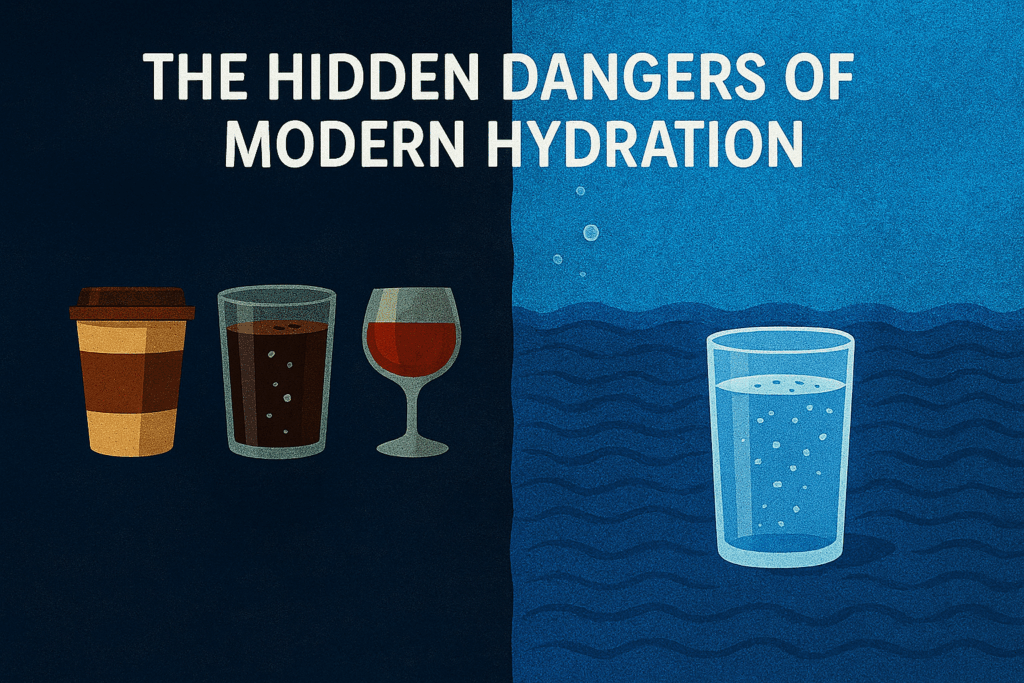
Coffee and alcohol are woven deeply into modern culture – one fuels our mornings, the other relaxes our evenings. Both are social staples and sources of pleasure, yet both can quietly undermine hydration and health when consumed without awareness. While moderate intake may have certain benefits, the diuretic effects of coffee and alcohol mean they ultimately draw more water out of the body than they provide.
For millions of people, the day doesn’t begin without coffee. Rich in antioxidants and natural stimulants, coffee can boost alertness, concentration, and even metabolism in moderation. Studies have shown that small amounts of caffeine can enhance athletic performance and mental focus.
However, coffee is also a mild diuretic. It increases urine output by stimulating the kidneys. This process causes the body to lose not just water but also valuable electrolytes such as sodium, potassium, magnesium, and calcium. Over time, excessive coffee consumption can deplete these minerals, leading to:
- Fatigue and muscle weakness
- Cramps and heart palpitations
- Nervousness, anxiety, and insomnia
Caffeine also triggers the release of stress hormones such as cortisol and adrenaline. While this provides a short-term burst of energy, it can lead to long-term adrenal fatigue if repeated daily without adequate hydration and rest. The result is a cycle of dependency: we drink coffee to feel awake, but the dehydration and adrenal strain it causes make us more tired and anxious later.
The modern coffee culture, with its oversized cups, sweetened lattes, and energy blends, amplifies these effects. Many coffeehouse drinks contain large amounts of sugar, artificial syrups, and whipped cream, transforming what could have been a mild stimulant into a calorie-dense, inflammatory beverage.
The combination of caffeine and sugar overstimulates the nervous system and spikes blood sugar levels, followed by a crash that leaves you craving more caffeine or sweets. Instead of true energy, the body experiences a roller coaster of stimulation and depletion.
Alcohol: The Great Dehydrator
Alcohol, too, holds a paradoxical place in modern life. In small amounts, it can promote relaxation, stimulate circulation, and even offer heart benefits due to compounds like resveratrol in red wine. But the body treats alcohol as a toxin, and its metabolism places heavy stress on the liver, kidneys, and nervous system.
Once consumed, alcohol suppresses vasopressin, an antidiuretic hormone that helps the body retain water. Without vasopressin, the kidneys expel water rapidly, increasing urination and causing the body to lose essential electrolytes. This is why even a single night of drinking often leads to:
- Frequent urination
- Thirst and dry mouth
- Headaches and dizziness
- Fatigue and nausea
This dehydration is one of the causes of hangover symptoms. As the body attempts to flush out the alcohol, it also loses vital minerals like magnesium, potassium, and zinc, leaving you depleted and inflamed.
While an occasional drink may not cause harm, chronic alcohol consumption slowly erodes the body’s ability to maintain hydration and balance. The liver – responsible for detoxifying alcohol – becomes inflamed and overworked. Over time, this can progress to fatty liver disease, cirrhosis, and impaired nutrient absorption.
Alcohol also disrupts the delicate communication between the nervous system and endocrine system, affecting sleep quality, hormone regulation, and emotional stability. The result is a body that feels perpetually tired and thirsty, yet struggles to absorb and retain the very water it needs to recover.
The combination of coffee in the morning and alcohol at night, a pattern common in modern living, sets up a cycle of hidden dehydration. You wake up tired and reach for coffee, which increases fluid loss. In the evening, you unwind with a glass of wine or beer, which further dehydrates the body.
Over time, this pattern leads to chronic, low-grade dehydration, which can manifest subtly as:
- Persistent fatigue or “afternoon crashes”
- Dry skin and premature aging
- Digestive issues and constipation
- Poor concentration or brain fog
- Increased susceptibility to illness
Because these symptoms develop gradually, most people fail to connect them to dehydration. The body’s natural signals for thirst are often mistaken for hunger or stress, leading people to eat when they really need water.
Bottled Water: A False Sense of Security
For those who dislike the taste of tap water, bottled water is a convenient and safe alternative. However, appearances can be deceiving.
Recent research shows that bottled water often contains microplastics and nanoplastics, tiny fragments that leach from plastic containers, especially when bottles are exposed to heat during transport or storage.
Once ingested, these particles can:
- Enter the bloodstream and accumulate in tissues
- Causes inflammation and oxidative stress
- Disrupts hormone balance and immune function
Ironically, many popular bottled water brands are just filtered tap water, sold at a premium while polluting the planet with millions of discarded bottles.
The Risks of Home Water Filters
Home filtration systems can improve taste and remove chlorine or sediment, but they are not foolproof. Many users believe that once a filter is installed, their water is completely safe. Unfortunately, without regular maintenance, filters can become breeding grounds for bacteria and mold.
- Activated carbon filters can trap organic matter that decays and promotes microbial growth.
- Old or clogged filters may release contaminants back into your drinking water.
- Poor-quality filter casings can leach chemicals into the water supply.
If filters aren’t cleaned and replaced on schedule, they may end up producing water that is less safe than unfiltered tap water.
Filtration systems often create a false sense of security. While they can remove certain impurities, most do not effectively eliminate:
- Pesticides and pharmaceutical residues
- Emerging contaminants like microplastics
- Industrial chemicals and heavy metals
Even high-end systems must be properly maintained to function safely. Studies have found that neglected filters can contain higher bacterial counts than the original water source.
True purity requires vigilance, regular maintenance, proper filter replacement, and awareness of what your system can (and cannot) remove.
Returning to Nature’s Water
Centuries ago, people drank directly from springs and rivers that were naturally filtered by the Earth. That water was alive, mineral-rich, structured, and free from industrial contamination. Today, finding such water is nearly impossible.
Modern hydration requires intention. To restore the quality of the water you drink:
- Choose glass or stainless-steel containers instead of plastic.
- Use multi-stage filters that target microplastics and heavy metals.
- Replace filters according to the manufacturer’s schedule.
- When possible, seek spring water sources tested for purity and mineral content.
Water should nourish, not burden, the body. The goal isn’t just hydration, it’s cellular nourishment through clean, balanced, mineral-rich water.
Hydration is about more than quenching thirst – it’s about restoring life at a cellular level. Soft drinks, coffee, alcohol, and even poorly maintained filters can’t replace what pure water provides.
As modern living distances us from nature’s clean sources, it becomes more important than ever to take responsibility for the quality of the water we consume. True health begins with the seven fundamentals for healthy longevity, and pure, living water is one of them.