
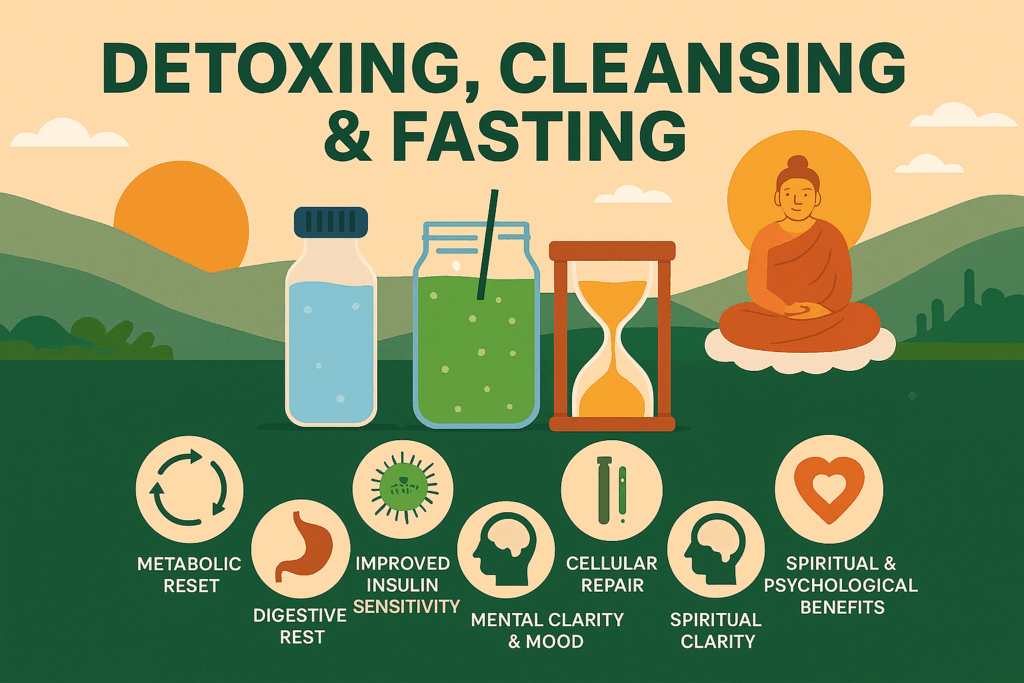




For thousands of years, fasting and cleansing have been part of human tradition, valued for their ability to refresh the body and renew the mind. Ancient cultures used to fast not only as a spiritual practice but also as a way to support health, giving the body time to rest, repair, and reset. Today, in a world filled with processed foods, environmental toxins, and constant stress, these practices have taken on new relevance.
Fasting, whether through intermittent patterns, juice cleanses, or short periods of water fasting, allows the body to shift its energy from digestion toward repair and detoxification. Cleansing complements this process by helping to clear the body’s natural elimination systems, the bowels, liver, kidneys, and lungs so they can function more effectively. Together, fasting and cleansing provide a powerful reset, helping us release what no longer serves us and rebuild vitality from the inside out.
We will explore how fasting works, why cleansing is essential in the modern age, and what approaches can be safely integrated into a lifestyle focused on health and longevity. It is not about quick fixes, but about reconnecting with practices that support the body’s natural ability to heal, recover, and thrive.
History of Fasting
Fasting is ancient, practiced across cultures and faiths for spiritual clarity, discipline, healing, and communal ritual. Written records and oral traditions from antiquity describe periods of voluntary food abstinence among Hindus, Buddhists, Jews, Christians, Muslims, and indigenous cultures. In the Judeo-Christian tradition, the Hebrew Bible and the New Testament describe extended fasts. The Torah records Moses spending long periods on Mount Sinai in the presence of God, and many interpret passages as including fasting. The Gospels tell that Jesus fasted for forty days in the wilderness before beginning his public ministry. These stories helped anchor long fasts in religious practice, and they influenced later fasting traditions such as the forty-day Lenten fast in Christianity. The historical accounts are spiritual narratives rather than clinical descriptions, still they show that fasting has long been valued for inward focus and transformation.
Types of Fasting, and what they mean
Intermittent fasting, juice fasting, and water fasting are common approaches today, each with distinct aims.
Intermittent fasting refers to regular cycles of eating and fasting within a day or week, for example, sixteen hours of fasting and eight hours of eating. It is practical, easy to adopt, and backed by studies showing improvements in weight management, insulin sensitivity, and markers of inflammation.
Juice fasting limits intake to freshly pressed vegetable and some fruit juices for a short period. It supplies fluids, vitamins, antioxidants, and a break from solid food. Juice fasts can feel gentle, and they increase hydration. Downsides include low protein, low fiber, and, in some juices, high sugar content, which can spike blood sugar in sensitive people.
Water fasting allows only plain water for a defined time. It produces deeper metabolic shifts such as ketosis, and some people report strong mental clarity and symptom relief. Water fasting carries a greater risk if done improperly, especially for more than a day or two, because of possible electrolyte imbalance, drops in blood pressure, and other metabolic stresses.
Benefits of fasting, why people fast
- Metabolic reset and weight support, fasting reduces insulin levels and encourages fat mobilization, which supports body composition goals.
- Improved insulin sensitivity, intermittent and short-term multi-day fasts can lower fasting glucose and improve how the body manages blood sugar.
- Cellular cleanup and repair, periods without food activate pathways that help cellular maintenance, and many researchers discuss autophagy as a mechanism for removing damaged proteins.
- Reduced inflammation, many people report lowered markers of systemic inflammation with regular intermittent fasting or short cleanses.
- Digestive rest and improved gut function, giving the digestive tract a break, can reduce bloating and improve motility when refeeding is done sensibly.
- Mental clarity and mood, fasting often sharpens focus and reduces brain fog for some people, possibly from ketone fuel and reduced inflammatory signaling.
- Spiritual and psychological benefits, many fast for clarity, discipline, better self-awareness, and an emotional reset.
What typically happens during multi-day fasts, one, three, and five days
Day 1, hours 0 to 24, transition, your body uses glucose in the bloodstream and liver glycogen, insulin falls, and you may feel hunger pangs, mild irritability, or early energy changes. Hydration matters; drink water steadily.
Day 2, around 24 to 48 hours, glycogen stores decline, the body increases fat mobilization, ketone bodies rise, appetite often decreases, and some people feel clearer mentally while others may feel tired, dizzy, or get headaches as the body adapts. For juice fasting, this stage is gentler because juices supply simple carbohydrates and micronutrients.
Day 3, roughly 48 to 72 hours, steady ketosis is more established for most people during water fasting, autophagy and cellular repair pathways become more active, energy often stabilizes, and inflammation markers may fall. Electrolytes require attention, and those on medications need supervision. Juice fasting by day three supplies antioxidants and fluids, while still lacking protein, which may make longer juice fasts less suitable for some people.
Days 4 and 5, continuing benefits and increasing caution, fat becomes a primary fuel; some people report deeper mental clarity and reduced pain or allergy symptoms. At the same time, risks rise without medical oversight for water-only fasts, including electrolyte depletion, lowered blood pressure. A supervised short fast may be helpful, but prolonged or repeated water fasts need medical oversight for safety.
Practical notes on juice fasts vs water fasts
Juice fasts, one to three days, are accessible, provide vitamins and antioxidants, encourage hydration, and can be a gentle reset. Use mostly low-sugar vegetable juices, limit high-fruit juices, and be mindful of blood sugar. Avoid juice fasts if you have diabetes or are on medications that affect glucose without medical advice.
Water fasts, one to five days and beyond, produce deeper metabolic shifts, often more rapid weight loss, and stronger autophagy signals. Because water fasts can change electrolytes, blood pressure, and kidney function, avoid attempting multi-day water fasts without medical clearance, especially if you take medications, have chronic disease, are pregnant or breastfeeding, or are older and frail.
Safety, refeeding, and common sense
- Hydration and electrolytes are essential. Sip water regularly, consider mineral or electrolyte solutions if fasting more than 24 hours, and stop if you feel faint, confused, or severely weak.
- Medications matter; if you take medicines for diabetes, blood pressure, or heart conditions, consult your physician before fasting because dosing may need adjustment.
- Refeeding gently, break fasts slowly with diluted vegetable juices, broths, steamed vegetables, and small portions of easily digested protein. Avoid heavy meals immediately after prolonged fasts. For fasts of three days or longer, allow two to four days to reintroduce normal meals gradually.
- Seek medical guidance – extended water fasts or fasts for people with chronic disease must be supervised by a licensed health professional.
The Number One Mistake People Make While Fasting
During many years of guiding people through fasts in my clinics, I’ve noticed a common mistake that most people overlook: they don’t keep their bowels moving during a fast.
When you stop eating, your digestive system slows down. Yet your body continues to process metabolic waste through the liver and pancreas. If that waste has no clear pathway out, it gets reabsorbed into the bloodstream, leading to headaches, nausea, fatigue, and a toxic overload. This is why many people experience “fasting headaches” within the first couple of days. They’re not just detox symptoms, but often signs of constipation.
Modern medicine defines “regular” bowel movements anywhere from three times a day to once a week. If you’re only eliminating every few days, you’re constipated. And when you begin a fast in that state, toxins can build up quickly.
Preparing for a Clean Fast
To prevent this, cleansing starts before the fast. I advise my clients to prepare their gut a few days ahead by:
- Avoiding fibreless foods such as bread, meat, eggs, cheese, and processed foods.
- Focusing on high-fiber foods like fresh fruits, vegetables, whole grains, legumes, nuts, and seeds.
- Staying hydrated with clean water throughout the day.
- Use mild herbal laxatives if needed, such as senna, cascara, or triphala, that can be found in capsulated herbal laxatives, but do not use chemical-based laxatives, which can irritate the intestines.
This preparation empties the bowels and reduces the likelihood of headaches or nausea once the fast begins.
Supporting Bowel Movements During the Fast
Even when fasting, waste continues to move through your system. To keep the bowels active:
- Each morning, drink a glass of water followed by 8–16 oz of prune juice, sipped slowly.
- If prune juice alone isn’t enough, combine it with a mild herbal laxative.
- Repeat this routine daily during the fast to support elimination.
By following this simple protocol, you’ll avoid the most common fasting mistake and experience a smoother, more effective cleanse.
Breaking a Fast: Why It Matters
The way you break a fast is just as important as the fast itself. After hours or days without food, your digestive system is resting. Jumping straight into heavy, oily, or processed foods can overwhelm the stomach, stress the liver and pancreas, and even undo much of the benefit you’ve gained. Gentle reintroduction allows the digestive organs to “wake up” gradually, preparing enzymes and bile, while preventing discomfort such as bloating, diarrhea, or nausea.
General Principles
- Start small and simple – Begin with easily digestible foods that are high in water content, such as fresh fruit, diluted fruit juices, or light vegetable broths.
- Chew thoroughly – Chewing initiates enzyme activity in the saliva and makes it easier for the stomach to process the food.
- Avoid heavy foods – Meat, dairy, fried foods, and highly processed meals should be avoided until the digestive system has re-adjusted.
- Hydrate well – Sip water or herbal teas as you reintroduce foods to help flush toxins and ease digestion.
- Listen to your body – Reintroduce food slowly, and if you feel bloated, sluggish, or nauseous, slow down the process.